
Review · GENEVA TOURS & DAY TRIPS
Self-Guided Audio Tour to the Many Faces of Geneva
Geneva can feel like a brochure until you walk it. This audio tour turns famous sights into short stories about virtues and sins, so the city makes more sense fast. I like the clear, photo-based directions, and I really enjoyed having an English audio track that explains what you are looking at without making you dig for context.
One thing to plan for: this is phone-based and depends on internet and your own headset. If your data signal is weak, expect slow loading or interruptions, so bring a plan B if you are in patchy signal zones.
In This Review
- Key highlights you will care about
- Price and value: what $13.29 buys you in Geneva
- Your walking route, start to finish (Sissi to Fountain de l’Escalade)
- How the tour makes Geneva click: virtues, sins, and moral themes
- Stop 1: La statue de Sissi Geneve and why tragedy becomes a monument
- Stop 2: Jet d’Eau, then Brunswick Monument and civic ideals in public form
- Stop 3 and 4: Rousseau and the National Monument, when public fame meets moral mess
- Stop 5 and 6: The Flower Clock’s pride lesson
- Stop 7: Evangelical Lutheran Church of Geneva and the idea of mercy in real life
- Stop 8: Place Bourg Du Four, justice icons, and a complicated past
- Stop 9: Cathedrale Saint Pierre, Jeremiah’s tears, and the Town Hall bench
- Stop 10: Reformation Wall and the cost of rigidity
- Stop 11 and 12: Dufour’s fight against evil, then Henri Dunant and Red Cross conscience
- Stop 13: Fontaine de l’Escalade (or Bel-Air) and the Genevan courage ending
- Tech and timing: how to make the audio work smoothly
- Who should book this self-guided Geneva audio walk
- Should you book it
- FAQ
- What language is the audio tour offered in?
- How long does the self-guided tour take?
- What is the price per person?
- Do I need tickets to enter the stops?
- Is there a live guide?
- What do I need to run the tour on my phone?
- Where does the tour start and end?
- Is this tour private?
- Are service animals allowed?
- Can I cancel for a full refund?
Key highlights you will care about
- Moral-story format: each stop links a landmark to a theme like anger, envy, justice, courage, temperance, or mercy
- 13 themed stops in 1 to 2 hours: enough structure for orientation, not so much that you feel trapped
- Free-to-view sights: every listed stop is marked as admission ticket free
- Photo directions: route guidance is designed to keep you moving correctly through central Geneva
- Self-paced walking: you control the pace, including when to pause for breaks
Other Geneva outings on our list
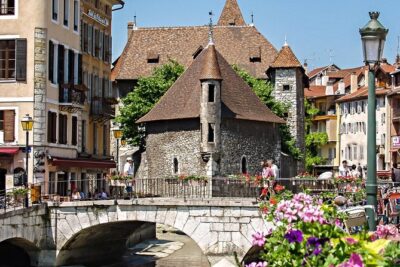
- Annecy – Venice of the Alps – Tour from Geneva★ 4.5 · 418 reviews
- Best of Geneva City Tour with optional boat cruise★ 4.0 · 416 reviews
- Geneva Highlights 2-Hour Introductory Tour★ 4.0 · 322 reviews
- Gruyères Tour from Geneva With Train, Chocolate and Cheese★ 4.5 · 258 reviews
Price and value: what $13.29 buys you in Geneva
At $13.29 per person, you are paying for something practical: a guided route you can repeat in real time, plus professional audio commentary and directions with pictures. The big value is not that it replaces a tour guide, but that it helps you look at Geneva with purpose. Instead of just taking photos, you get a mental framework for why monuments, churches, and civic sites matter.
Also, because the listed stops are admission ticket free, you are not stacking venue fees on top of the price. That makes this a decent choice when you want highlights but you do not want to manage ticket lines.
Your walking route, start to finish (Sissi to Fountain de l’Escalade)
This tour is a point-to-point walk. You begin at the Monument to Empress Sissi on Quai du Mont-Blanc 10, 1201 Genève, then you end at the Fontaine de l’Escalade on Rue de la Confédération 4, 1204 Genève. The format is designed for a loop-like experience across central sights rather than a single museum visit.
Timing is flexible, but the stops are spaced out like this:
- A short set of quick landmark pauses early
- A longer Cathedral and Town Hall area segment
- More short stops with story-driven monuments
- A final stop at the fountain that closes the theme
In plain terms, you can treat it as a half-day warm-up in Geneva. Or, if you are short on time, it works as a fast orientation walk that still feels like more than sightseeing.
How the tour makes Geneva click: virtues, sins, and moral themes
This experience is built around a specific storytelling lens. The commentary connects major landmarks to vices and virtues, including themes like anger, envy, justice, courage, temperance, mercy, pride, and even confession and reform.
If you like history as dates and dates only, this format may feel too philosophical at times. But if you enjoy seeing how beliefs shape public spaces, it is a clever approach. You end up noticing details you would otherwise gloss over: statues that point to specific ideas, civic buildings tied to moral judgments, and memorials that keep an emotional story alive.
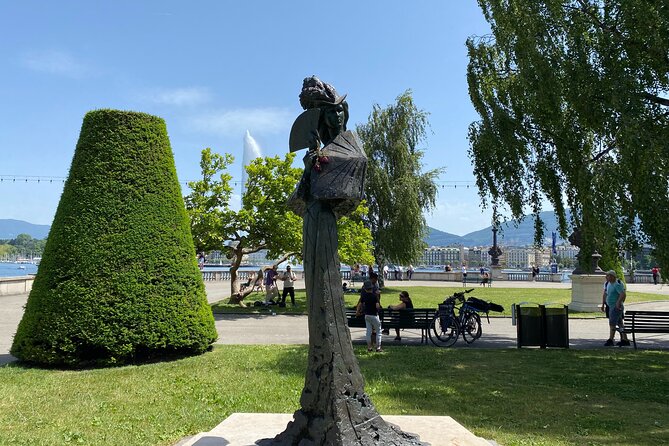
Stop 1: La statue de Sissi Geneve and why tragedy becomes a monument
You start near La statue de Sissi Geneve. The audio focuses on an empress who was taken in a tragic event involving an anarchist, and it spends time on the how and especially the why.
What makes this start work is that it immediately sets the tone. You are not only learning a fact about an incident. You are also learning how Geneva remembers, how a city turns grief and shock into public meaning, and why a statue can function like a moral lesson.
Practical note: this first stop is brief, about 10 minutes, so it is a good kickoff even if you are still finding your rhythm.
More Swiss days with a guide attached

Stop 2: Jet d’Eau, then Brunswick Monument and civic ideals in public form

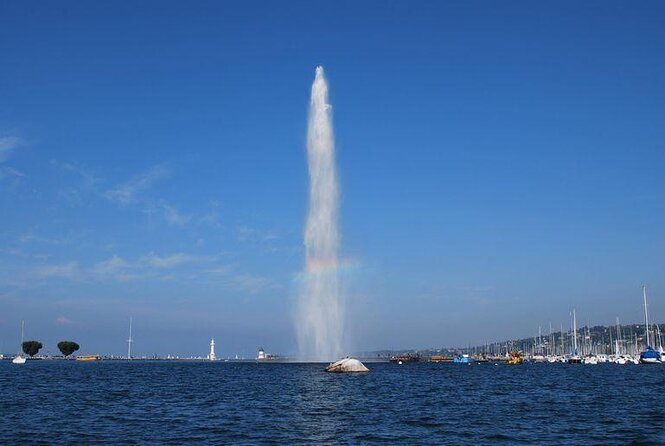
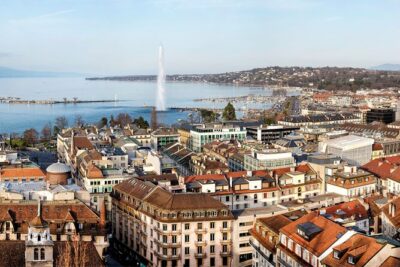
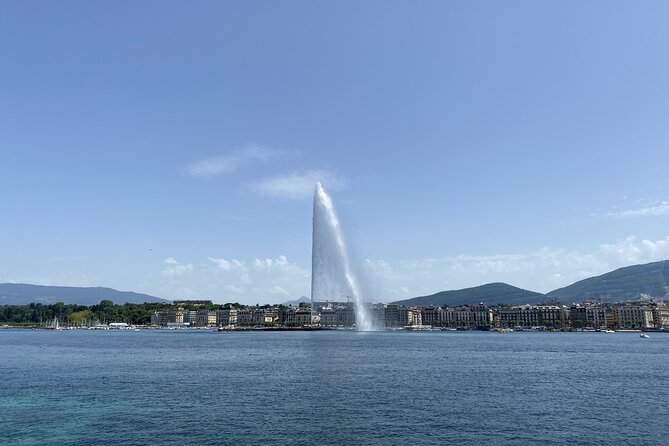
Next comes Jet d’Eau, the fountain that is described as one of the world’s largest. The commentary asks you to think about how something physical and visible can connect to the idea of making the world a better place.
After that, you head to the Brunswick Monument. This one is tied to a generous benefactor, plus images of virtues carved into the structure. In other words, the tour does not treat the monument like decoration. It treats it like a message people agreed to display.
If you like symbolism, these two stops together are a nice pairing. One uses water and spectacle. The other uses stone and virtue imagery.
Stop 3 and 4: Rousseau and the National Monument, when public fame meets moral mess
Then you reach the Statue de Jean-Jacques Rousseau. The audio points out that the monument commemorates him, and it follows with a discussion of sins he openly confessed. That choice matters. It frames Rousseau as human, not saint, and it nudges you to think about how public monuments can hold contradiction.
After Rousseau, you move to the Monument National. Here, the story is about how it was selected in a competition for erection. That is a different type of meaning, less about personal morality and more about civic process, public taste, and decision-making.
If you tend to skip over monuments as background, these stops give you a reason to slow down. You start to look at monuments as arguments people built in stone.
Stop 5 and 6: The Flower Clock’s pride lesson
The tour then brings you to the Flower Clock. The commentary connects it to the concept of pride.
This stop is short and visually easy. You will likely spend your time watching details rather than reading yourself into complexity. The prize here is how quickly it changes your perspective. It is not just a pretty clock. It becomes a symbol you can carry in your head as you continue walking.
Stop 7: Evangelical Lutheran Church of Geneva and the idea of mercy in real life
At the Evangelical Lutheran Church of Geneva, the audio explores different religious perspectives on salvation, specifically how sins and good deeds are understood to affect a person’s salvation. The tour also connects this church to the adjacent Palace of Justice, where the theme of mercy is introduced.
This is one of the more reflective stops on the route. It is also a good example of why the tour’s approach can either delight you or frustrate you, depending on your taste. If you want strict civic history, this could feel heavy. If you want to understand how moral thinking shapes institutions, this makes the Palace of Justice feel more personal than just a big building.
Stop 8: Place Bourg Du Four, justice icons, and a complicated past
Next is Place Bourg Du Four. The commentary focuses on a monument representing a Genevan champion for justice, then it brings up the history of past red-light districts.
The takeaway is not gossip. It is the contrast. Geneva’s ideals have always had friction with reality. You end up thinking about how cities deal with wrongdoing, reform, and public reputation over time.
This stop is about 10 minutes, which is a decent length. It gives you enough context without turning it into a full lecture.
Stop 9: Cathedrale Saint Pierre, Jeremiah’s tears, and the Town Hall bench
This is the long one: the route continues to Cathedrale Saint Pierre for about 20 minutes total across related points.
You start with the cathedral and an association with the virtue of temperance. Then you get the statue of the Prophet Jeremiah, often referred to as the weeping prophet. The audio uses that image to link belief, emotion, and restraint.
Finally, you move to the nearby Town Hall building, where a stone bench is tied to pronouncements of death sentences by Geneva’s judges.
This stop hits hard in a good way, if you can handle it. It is not just religious architecture. It is moral gravity. Temperance is one virtue. The weeping prophet is another kind of emotional truth. And the bench tied to death sentences reminds you that justice has a dark edge.
If you get uncomfortable with heavy themes, this is the segment to plan for. Bring patience. Take breaks if you need them. The route is short enough that you can breathe and keep going.
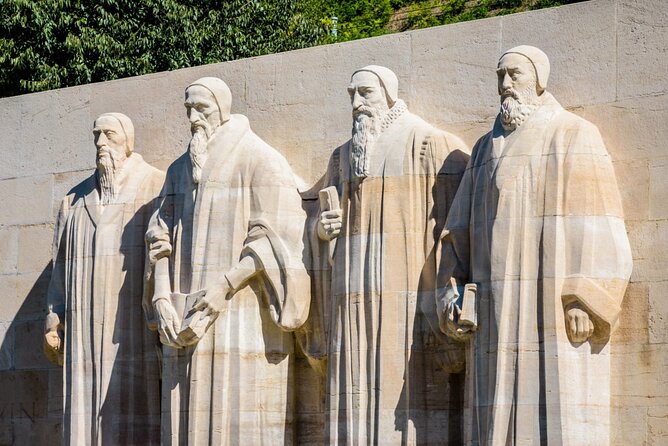
Stop 10: Reformation Wall and the cost of rigidity
At the Reformation Wall, the audio discusses which theologians faced criticism for inflexibility, mercilessness, and heartlessness.
This is a tricky theme, and that is why it works. The Reformation is often taught as progress, but the tour nudges you toward the uncomfortable truth that reform can still produce harsh behavior. You are encouraged to think about how moral certainty can turn into cruelty.
If you like your religious history in an opinionated package, you may love this stop. If you prefer a neutral museum style, keep in mind this tour’s whole structure leans moral and reflective.
Stop 11 and 12: Dufour’s fight against evil, then Henri Dunant and Red Cross conscience
After the Reformation Wall, you move to the Statue General Guillaume-henri Dufour. The audio gives insight into his valiant struggle against evil. The point is not only the biography. It is the framing of courage against moral wrong.
Then you reach the Buste Henri Dunant, a Red Cross founder. The commentary focuses on the intricacies of his life and mentions surprising parallels with Leo Tolstoy.
This pair is a nice change of pace. Instead of focusing only on public judgment, you shift toward human care and moral action. If you are the type who wants a tour to leave you with something hopeful, this is one of the best parts of the route.
Stop 13: Fontaine de l’Escalade (or Bel-Air) and the Genevan courage ending
The tour concludes at the Fontaine de l’Escalade ou de Bel-Air. The audio presents the fountain as a marker of the courage of the Genevans.
It is a satisfying ending because the tone turns from judgment and complexity toward endurance. You started with a tragedy turned into a statue. You end with a fountain built to remember bravery.
If you are tired, you will still get a clear ending point. And you will not wander around asking where to go next.
Tech and timing: how to make the audio work smoothly
This is a self-guided audio experience, so the quality of your day hinges on your setup.
Here is what matters based on how the experience is built:
- You need your own mobile phone
- You need internet to run the audio
- You need headphones/headset
- You access the tour through a link provided after booking, and you use a mobile ticket
Because the audio depends on connectivity, weak coverage is the biggest risk. If you want this to feel smooth, I recommend:
- Starting the tour once you have a stable signal
- Keeping screen brightness reasonable so the audio app stays responsive
- Carrying a small plan for interruptions, like pausing and retrying rather than panicking
The tour is still designed to be easy to follow, and the photo-based directions help you correct course quickly.
Who should book this self-guided Geneva audio walk
This is a great fit if:
- You want an easy way to get oriented in Geneva without hiring a live guide
- You like walking, photos for directions, and short stops
- You enjoy stories that connect monuments to moral ideas, not just construction dates
You might hesitate if:
- You want straight architectural facts with lots of historical specifics and fewer moral reflections
- You know you will struggle with mobile internet coverage
- You hate tours where the phone is essential rather than optional
Should you book it
I would book it if you want a smart, story-driven way to see Geneva in 1 to 2 hours, and you like the idea that monuments can teach you more than you expected. The price feels fair because you are buying a clean route, professional audio, and directions you can actually follow.
Skip it, or at least be cautious, if you rely on offline audio or you are traveling without a reliable internet setup. Also, if you strongly prefer history in purely factual terms, the moral themes might feel like the main event.
If you are flexible and you enjoy thinking while you walk, this tour is an efficient way to turn Geneva landmarks into meaning.
FAQ
What language is the audio tour offered in?
The tour is offered in English.
How long does the self-guided tour take?
It takes about 1 to 2 hours.
What is the price per person?
The price is $13.29 per person.
Do I need tickets to enter the stops?
All stops listed are marked as admission ticket free, so you do not need paid entry tickets for these specific points.
Is there a live guide?
No. There is no live guide. You follow the tour using the link provided after booking.
What do I need to run the tour on my phone?
You need your own mobile phone with internet and headset.
Where does the tour start and end?
It starts at the Monument to Empress Sissi on Quai du Mont-Blanc 10, 1201 Genève, and ends at the Fontaine de l’Escalade on Rue de la Confédération 4, 1204 Genève.
Is this tour private?
Yes. It is private, meaning only your group participates.
Are service animals allowed?
Yes. Service animals are allowed.
Can I cancel for a full refund?
Yes, you can cancel for a full refund if you cancel at least 24 hours in advance.
More Guided Swiss Outings

The Rest of the Switzerland Reviews
Geneva, More of It
Just added to the Switzerland review pile
- Private Photo Tour LUXE CUSTOM in Geneva
★ 4.5 · 3 reviews - Alpine Tour Across Switzerland
★ 5.0 · 3 reviews - Old Town Geneva Private Walking Tour
★ 4.5 · 4 reviews - Private Transfer from Geneva City to Geneva Airport
★ 5.0 · 4 reviews - Lake Annecy Private Day Trip from Geneva
★ 4.0 · 4 reviews - Explore the Instaworthy Spots of Geneva with a Local
★ 4.0 · 4 reviews
Geneva Tours & Day Trips next to each other.
 ★ 5.0Award-Winning Geneva Chocolate &Old Town Tour with Boat Ride (3h)From $1313,721 reviews
 ★ 4.5Annecy – Venice of the Alps – Tour from GenevaFrom $99418 reviews
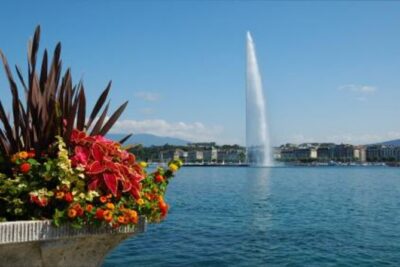 ★ 4.0Best of Geneva City Tour with optional boat cruiseFrom $76416 reviews
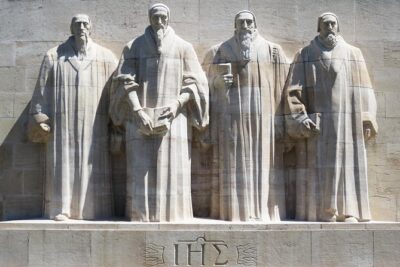 ★ 4.0Geneva Highlights 2-Hour Introductory TourFrom $76322 reviews
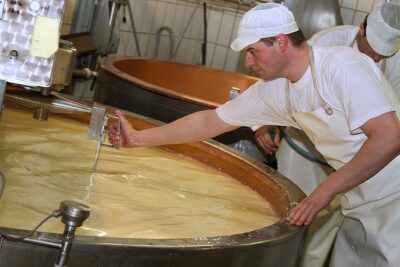 ★ 4.5Gruyères Tour from Geneva With Train, Chocolate and CheeseFrom $305258 reviews
 ★ 4.0Sightseeing Cruise at Geneva with Wine and AperitifFrom $38235 reviews
 ★ 4.0Chamonix and Mont-Blanc Independent Day Trip from GenevaFrom $111221 reviews
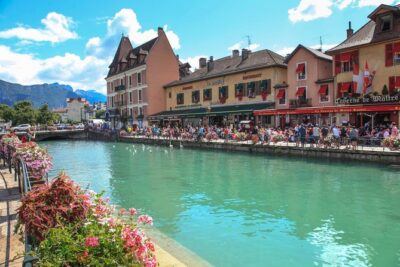 ★ 4.0Geneva and Annecy Tour With Optional Lake Geneva CruiseFrom $162151 reviews
Browse the lists this tour appears in