
Review · TOURS
Alpine Tour Across Switzerland
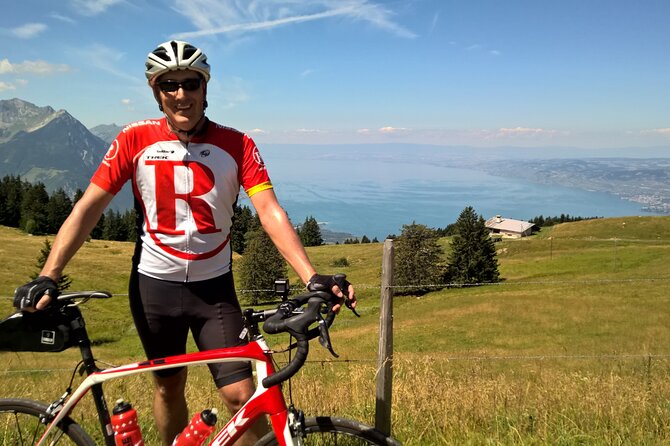
Switzerland feels different at 75 km per day. This is a road-cycling trip built for strong climbers, with big daily elevation and a route that keeps changing scenery through towns and lake crossings. You ride long enough to feel like it is real training, yet the days are paced with memorable breaks like lake cruises and pass descents.
I love the climb focus and the way the itinerary mixes hard riding with scenic water moments.
I also like how the support stays human. Bike Switzerland’s John is known for fast, helpful replies before you go, and steady guidance around the ride, so logistics do not feel scary. And since the group caps at 12 riders, you are not stuck in a giant pack.
One key consideration: this is pricey for what it is, and it is not a casual holiday. Expect 6 to 7 hours in the saddle daily, plus around 1,000 meters of climbing, so you should only book if your fitness is already solid.
In This Review
- Key highlights to know before you commit
- A climber’s Alpine route, starting in Geneva and aimed at real saddle time
- What 6 to 7 hours in the saddle really means for your body
- Day 1 in Geneva: a city start before the climbs
- Day 2: Lake Geneva cruise to Yvoire, then the climb into Chatel
- Day 3: A big climb day to Gruyère, with a fondue goal
- Day 4 and Day 5 around Thun: gentler roads and a smart rest choice
- Day 6: Alpine Panorama roads through Emmental, ending in Fluehli
- Day 7: Glaubenbühlen pass, then lake roads to Beckenried
- Day 8: Lake Lucerne boat ride, then Klausen Pass into Weesen
- Day 9 and Day 10: Appenzell valleys, then Heiden and Lake Constance
- Romanshorn finish, bike storage, and a 4.5 hour train return to Geneva
- Price and value: $4,596.97 per person for a serious cycling program
- Who should book this Alpine cycling week
- Should you book this Alpine Tour Across Switzerland?
- FAQ
- How many days is the Alpine Tour Across Switzerland?
- Where is the tour start meeting point in Geneva?
- How long is the bike-free return from the last day?
- What fitness level do I need?
- What is the daily riding expectation?
- What group size should I expect?
- Is this tour ticketed digitally?
- Are there any boat or cruise parts?
- What big climbs and passes are on the route?
- Can I get a full refund if I cancel?
Key highlights to know before you commit
- Consistent climbing targets: about 75 km per day and roughly 1,000 m of ascent, day after day
- Lake crossings that break up the effort: Geneva to Yvoire by cruise, plus a Lake Lucerne boat ride
- Two signature big-pass days: Glaubenbühlen early on, then Klausen Pass later
- French and German Switzerland mix: you ride from the French-speaking side to the German-speaking side and feel the shift
- Small-group feel: maximum of 12 travelers, with a tour designed for road cyclists
- Flexible recovery option in Thun: you can add a rest day and choose hikes or lakes
Still comparing? These Switzerland tours held up when we reviewed them.
- Award-Winning Geneva Chocolate &Old Town Tour with Boat Ride (3h)★ 5.0 · 3,721 reviews
- Chamonix & Mont Blanc Panoramic Sky-Glass Bus Guided Day Trip★ 4.0 · 1,324 reviews
- Annecy – Venice of the Alps – Tour from Geneva★ 4.5 · 418 reviews
- Best of Geneva City Tour with optional boat cruise★ 4.0 · 416 reviews
A climber’s Alpine route, starting in Geneva and aimed at real saddle time
This is not a cruise ship with handlebars. The heart of the experience is road riding, with enough time in the seat that you feel it in a good way. You are averaging about 75 km each day and roughly 1,000 m of climbing, which means your legs get trained, not just entertained. Plan on 6 to 7 hours in the saddle, so even a “lighter” day still takes focus.
What makes it more interesting than a pure training camp is the rhythm of the route. You do get long stretches on roads that feel quiet and classic, plus water stops that reset your brain. Those lake moments matter because they give you mental space while you still keep moving every day.
And yes, you are based out of places with character. Geneva opens the trip with a real-city feel. Then you work your way into smaller towns where Swiss life runs slower and food becomes part of the reward cycle.
What 6 to 7 hours in the saddle really means for your body
On paper, 75 km sounds manageable. In the Alps, it is not about distance alone. It is about how that distance is stacked with climbing. With around 1,000 meters per day, you should expect repeated bursts of effort, followed by descents and stretches of steady work.
So I’d plan your training around two things:
- Endurance pace: you should be able to ride for hours without constant sprinting
- Climbing comfort: you do not need to be a racer, but you must feel okay doing sustained climbs at a controlled effort
Your payoff is that these days have a rhythm you can actually learn. After a couple of riding days, you will start to anticipate where the work shows up, and you can ride more calmly. That makes the trip feel less like survival and more like progression.
Day 1 in Geneva: a city start before the climbs
You begin in Geneva, at Rue des Grottes 22, 1201 Genève. The trip starts with an overnight in the city, which is useful if you like to get oriented without stress. Geneva is also a strong “gear check” location. You can sort anything that needs sorting, then roll out ready.
Think of Day 1 as your warm-up for the whole mental game. You are not climbing yet, but you are setting up the habit of early starts, steady fuel, and checking your bike and clothing. If you want to keep this trip fun, treat Day 1 like the day you prevent problems, not the day you create them.
Day 2: Lake Geneva cruise to Yvoire, then the climb into Chatel
Day 2 uses a clever trick: you start with a cruise from Geneva to Yvoire on the French side of the lake. That is not just sightseeing. It gives your legs a break and helps you shift from “arrival mode” to “riding mode.”
After the water portion, you climb to Chatel for the night, then later come back into Switzerland. The value here is balance. You get a change of pace, and you still end the day somewhere scenic and cycling-friendly.
If you tend to overdo it on day one and day two, you may love this structure. It makes it easier to start at a sustainable rhythm, especially for strong riders who still need to pace.
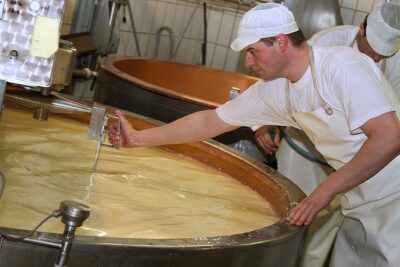
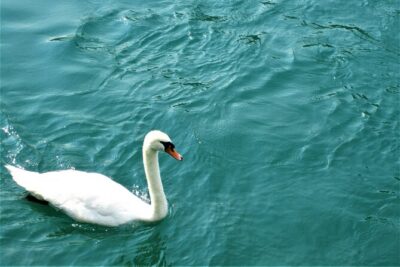
Day 3: A big climb day to Gruyère, with a fondue goal
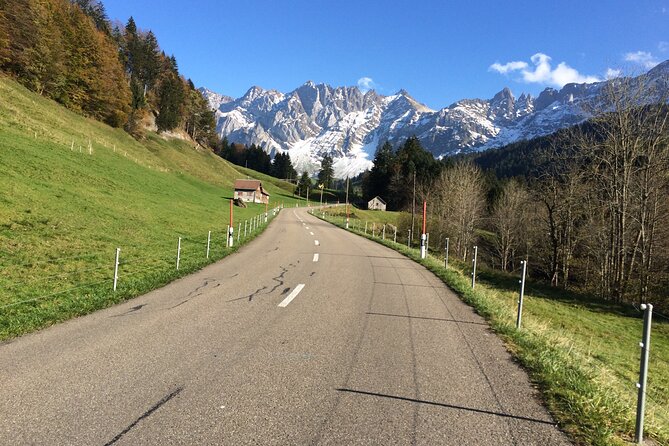
Day 3 heads toward Gruyère, and the climb is a true highlight. You are looking at around a 1,500 m climb, which is one of the “this is why you booked” days. It takes you high above Lake Geneva, and the town of Gruyère makes the payoff feel real.
This is also one of the most food-forward moments on the trip. You can plan on fondue in Gruyère, as long as the weather cooperates. Even if you are not a fondue superfan, the point is the reward cycle: long climb, big scenery, then comfort food in a place that knows how to welcome cyclists without turning it into a theme park.
Day 4 and Day 5 around Thun: gentler roads and a smart rest choice
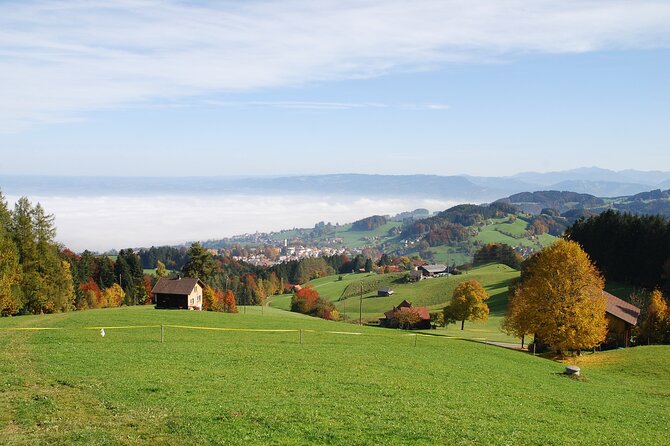
On Day 4, you move from the French-speaking side to the German-speaking side. It is not a throwaway detail. You can feel Switzerland change in language, signs, and the overall vibe, and you get a sense of the country’s cultural split while riding.
The day is built around gentle rolling hills through the Gantrisch Nature Park, with no killer climbs. For your training, that matters. It gives your body a chance to absorb the climbing you already did, instead of adding another monster ascent immediately.
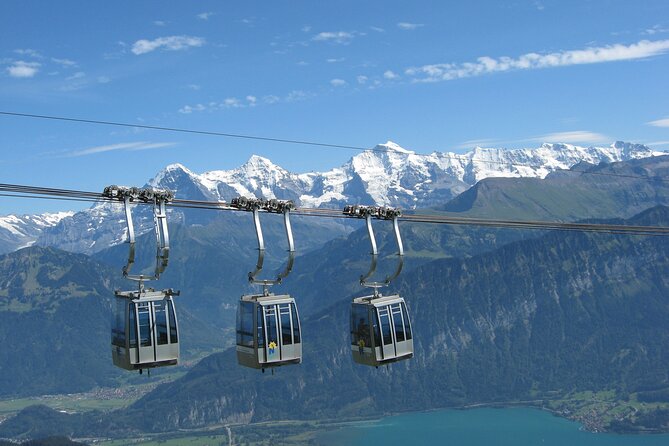
Then Day 5 gives you a smart optional twist: many riders choose to spend an extra day in Thun for recovery. You can hike nearby Swiss Alps options such as Niederhorn or Jungfrau, or keep it easy with time on Lake Thun or Lake Brienz. This is valuable because it lets you customize the trip to your body, not just the calendar.
Day 6: Alpine Panorama roads through Emmental, ending in Fluehli
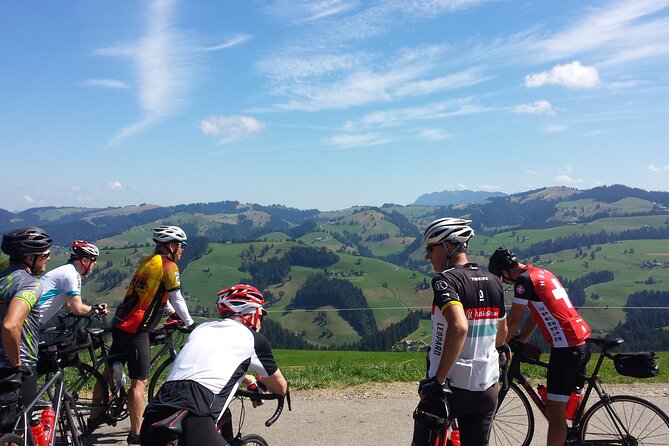
Day 6 leans into Swiss “cheese country” scenery. You ride the Alpine Panorama route through Emmental, and you stay in Fluehli at a recently renovated historic hotel. The town is isolated in a way that can feel refreshing after riding days, and it is close enough to still feel connected.
You also get an activity that is more about recovery than bragging rights: cool-water baths just above town. Even if you are not a spa person, baths like this can take the edge off the pounding you have absorbed in the pedals and saddle.
Expect roads that feel narrow and quiet. That tends to be part of why cyclists love Swiss cycling. Just remember you still need to ride actively, not just stare.
Day 7: Glaubenbühlen pass, then lake roads to Beckenried
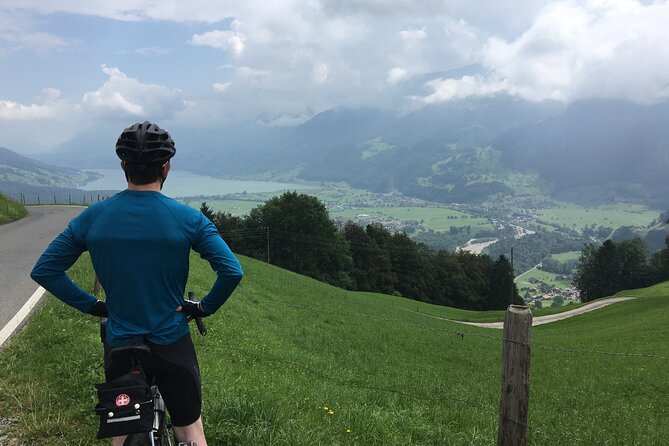
Day 7 offers a “relief from climbing,” with one catch. You still have to get over Glaubenbühlen pass first. The description frames it well: by the time you start the descent, you are already halfway up.
Then the descent becomes a reward moment, with incredible views of Lake Sarnen and beyond. That visual payoff is not fluff. It helps you stay calm on descents and keeps the day feeling like a ride, not a chore.
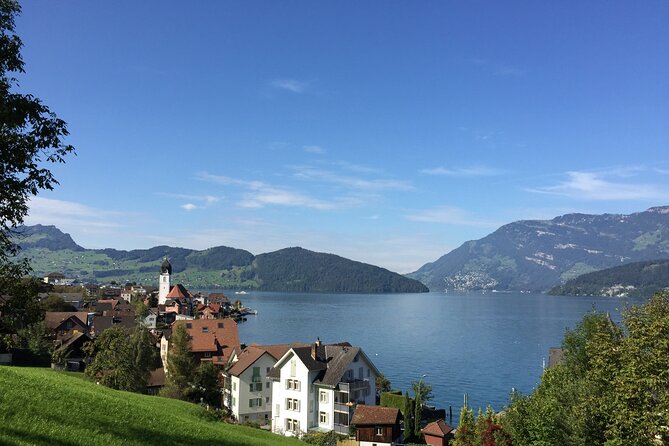
After you drop down, most of the day runs along flat lake roads until you reach Beckenried on Lake Lucerne. That shift is a big deal for tired legs, because it lets you spin without constantly fighting a gradient. If you start Day 7 feeling spent, this is the day where you can genuinely recover while still feeling productive.
Day 8: Lake Lucerne boat ride, then Klausen Pass into Weesen
Day 8 begins with another water break: a boat ride to reach the other side of Lake Lucerne. Again, that matters. It reduces fatigue while keeping the route moving.
Once you reach Altdorf, you start the toughest climb of the tour: Klausen Pass. You are looking at about 1,600 m of climbing in 20 km, then a 20 km coast downhill. That combination is classic Alpine cycling. You work hard, then you get your legs to breathe while the road carries you.
You end in Weesen on Lake Walensee. Finishing near water is a smart way to end a brutal climb day. Your body gets the chance to calm down, and your mind gets a satisfying ending to a long effort.
Day 9 and Day 10: Appenzell valleys, then Heiden and Lake Constance
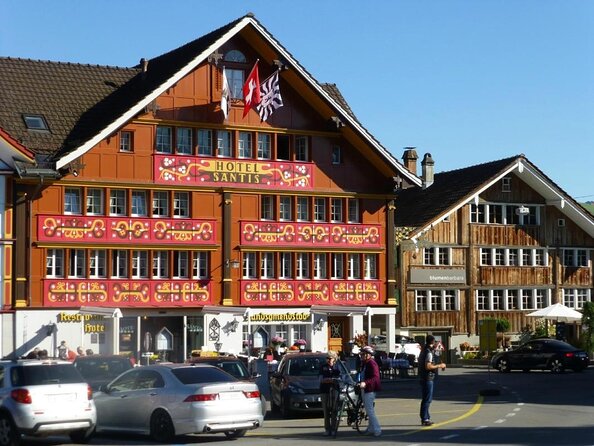
After Klausen, the trip turns toward variety. Day 9 moves through Appenzell’s beautiful valleys with the Santis mountain in view. You skirt the base of Santis before heading toward pasture lands and then into the town of Appenzell, surrounded by flowering meadows.
Day 10 keeps rolling through the region. The ride pattern is described as gentle climbing and coasting. Since Appenzell is a natural roller-coaster, the day rewards riders who can stay smooth rather than grind hard all the time.
Your last climb goes up to Heiden, where you can stop for ice cream and get your first look at the sprawling Lake Constance. I like that final sensory detail. It is a way of telling your brain you are entering the endgame.
You stay on the shores of Lake Constance in Romanshorn, which sets up the finish without making you feel like you are stuck in transit.
Romanshorn finish, bike storage, and a 4.5 hour train return to Geneva
On the final day, you leave your bike in Romanshorn, and then you board a train back to Geneva, with the ticket supplied. The return is about 4.5 hours. It is a nice end because you do not ride yourself into the ground on the last morning.
You can also stop in Bern on the way, and the tour encourages it so you can stretch your legs and see sites in Switzerland’s capital. This is one of the best bonuses for people who want cycling to be the core, but still want their trip to include a real urban moment at the end.
Price and value: $4,596.97 per person for a serious cycling program
Let’s talk money plainly. At $4,596.97 per person, this is an expensive bike trip. You should treat it as paying for a lot of friction removed. You are not piecing together trains, arranging route transfers by lake cruise and boat, and finding lodging in every stage town while also planning pass days.
You are also paying for time and structure. You get:
- A route that targets real climbing goals
- Daily ride expectations (about 75 km and about 1,000 m)
- Support from Bike Switzerland and the kind of fast communication that keeps you confident while you travel
You also get practical touches like a mobile ticket, and a limit of 12 travelers which usually means a better organized experience than a huge group tour.
The main value question is whether you personally want an 11-day, climb-heavy ride. If your goal is mostly scenery with gentle days, this price will feel steep. If your goal is to ride hard and feel accomplished, it starts to make sense fast.
One more note: it is commonly booked about 101 days in advance. That suggests people who want this ride plan ahead, especially since it is capped.
Who should book this Alpine cycling week
This tour fits best if you are:
- A strong, experienced road cyclist who enjoys climbing
- Comfortable with 6 to 7 hours in the saddle
- Able to handle long days of sustained effort and frequent elevation changes
It is less ideal if you:
- Want mostly flat riding
- Get nervous on steep descents
- Are still building your climbing fitness
If you are the type who likes earning the views, and you like the idea of mixing passes, lake cruises, and Swiss towns, you will probably feel at home here.
Should you book this Alpine Tour Across Switzerland?
Book it if you want a real cycling holiday in Switzerland, with a structure that makes climbing the main event. The combination of steady daily distance, serious elevation targets, and built-in breaks like lake cruises and boat rides keeps the trip from turning into monotony. Add in the fact that John at Bike Switzerland is known for quick help, and the small group size, and you get a smoother experience than many self-guided plans.
Skip it if you are shopping for an easy sightseeing trip. The long saddle time is not decorative. It is the point.
If you are on the edge fitness-wise, do the honest test: can you ride for hours with consistent climbing without needing a miracle day? If yes, this is a great match. If no, you will have more fun choosing a gentler route and saving your legs for a tour that feels like a win, not a fight.
FAQ
How many days is the Alpine Tour Across Switzerland?
It runs for about 11 days.
Where is the tour start meeting point in Geneva?
The meeting point is Rue des Grottes 22, 1201 Genève, Switzerland.
How long is the bike-free return from the last day?
On the last day, you leave your bike in Romanshorn and take a train back to Geneva. The return is about 4.5 hours.
What fitness level do I need?
You should have strong physical fitness. The ride includes about 75 km per day with around 1,000 meters of climbing daily, and you can expect 6 to 7 hours in the saddle each day.
What is the daily riding expectation?
On average, cyclists ride about 75 km per day with roughly 1,000 meters of daily climbing, typically spending 6 to 7 hours riding per day.
What group size should I expect?
The tour has a maximum of 12 travelers.
Is this tour ticketed digitally?
Yes, it includes a mobile ticket.
Are there any boat or cruise parts?
Yes. You take a cruise from Geneva to Yvoire on Day 2, and there is also a boat ride on Lake Lucerne on Day 8.
What big climbs and passes are on the route?
Two highlighted climbs are Glaubenbühlen pass and Klausen Pass.
Can I get a full refund if I cancel?
Yes. Free cancellation is offered, and you can cancel up to 24 hours in advance of the experience for a full refund.
More Guided Swiss Outings
The Rest of the Switzerland Reviews
Just added to the Switzerland review pile
- Private Photo Tour LUXE CUSTOM in Geneva
★ 4.5 · 3 reviews - Alpine Tour Across Switzerland
★ 5.0 · 3 reviews - Old Town Geneva Private Walking Tour
★ 4.5 · 4 reviews - Private Transfer from Geneva City to Geneva Airport
★ 5.0 · 4 reviews - Lake Annecy Private Day Trip from Geneva
★ 4.0 · 4 reviews - Explore the Instaworthy Spots of Geneva with a Local
★ 4.0 · 4 reviews
Tours next to each other.
 ★ 5.0Award-Winning Geneva Chocolate &Old Town Tour with Boat Ride (3h)From $1313,721 reviews
 ★ 4.0Heidiland and Liechtenstein Tour from ZurichFrom $1201,745 reviews
 ★ 4.0Best of Zurich Tour with Felsenegg Cable Car and Ferry RideFrom $861,229 reviews
 ★ 4.5Rhine Falls and Stein am Rhein Half-Day Tour from ZurichFrom $108716 reviews
 ★ 5.0Zurich Walking Tour With Cruise and Aerial Cable CarFrom $111669 reviews
 ★ 5.0Kayak Tour of the Turquoise Lake BrienzFrom $166566 reviews
 ★ 4.5Zurich Old Town Walking TourFrom $33479 reviews
 ★ 5.0Winter Kayak Tour of the Turquoise Lake BrienzFrom $202439 reviews