
Review · INTERLAKEN & THE BERNESE OBERLAND
Canyoning Interlaken with OUTDOOR
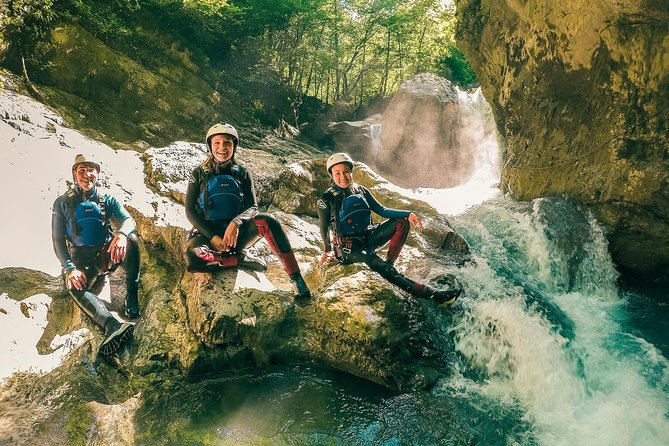
Canyoning near Interlaken feels like an Alpinist’s cheat code. You start with a real safety briefing and technique practice, then put it to work on a 10m (33 ft) abseil into the canyon. I also love that it’s a small-group format, so guides can tailor support as you learn new moves, and you are not just a passenger in someone else’s adventure. One catch to plan for, the water is cold enough that you will want the wetsuit, and the early adrenaline can make nerves feel louder than the hike up.
From Interlaken, you get a pickup option from the train stations or even your accommodation, then a scenic ride toward Wilderswil beneath the Jungfrau, Mönch, and Eiger peaks. Once you arrive, you walk up to the canyon entrance, get geared up with helmet, harness, and life jacket, and you transition from “tourist mode” to “I can actually do this” mode fast. In the group, guides like Andy and Gerard set an easy pace, and you can still keep a calm head while doing the drops and slides.
The tour runs about 3 hours, with the total experience closer to 3.5 hours including time back toward Interlaken. As a beginner, you do not have to be a swimmer, but having basic swimming skills helps, and some jumps may feel intense until your brain trusts the rope and the water.
In This Review
- Key points at a glance
- Getting to Wilderswil: scenic transfer and pre-gear nerves
- The safety briefing that makes beginners feel steady
- 10m abseil into the canyon: the move that changes your day
- Jumps, chutes, and slides: how the canyon run actually flows
- Gear, showers, and what to pack for a comfortable return to Interlaken
- Price and value: why $205 feels fair for what you get
- Who should choose this canyoning trip near Interlaken
- Should you book canyoning with OUTDOOR in Interlaken?
- FAQ
- FAQ
- How long is the canyoning experience near Interlaken?
- What does the tour cost?
- Where do you meet, and where do you return to?
- Is the tour offered in English, and do I get a mobile ticket?
- What are the minimum age and weight limits?
- What should I bring, and do I need swimming skills?
- What are the main vertical elements, like the rappel and jump options?
- What is included in the price?
- What happens if weather is bad?
Key points at a glance
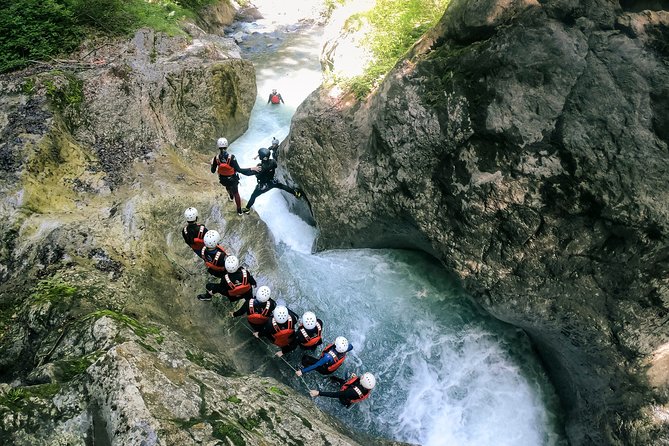
- 10m rappel (33 ft) is the main entry challenge, and it is guided from the start
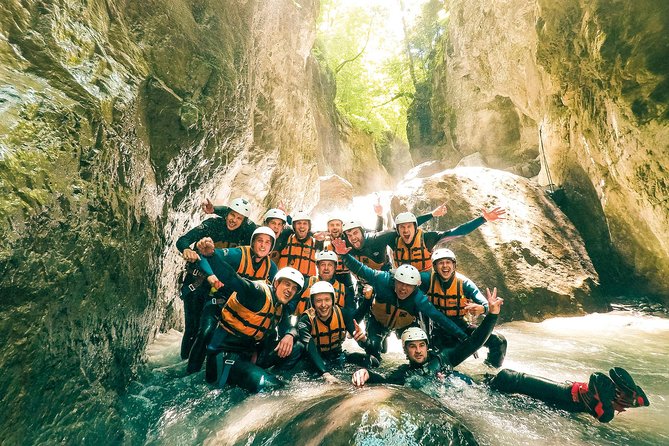
- Max 24 people means your guide can keep an eye on you during every section
- Jumps and slides are built in, with an easier alternative possible for the 5m (16 ft) high jump
- Cold-water comfort is handled with provided wetsuit gear, plus changing rooms and hot showers
- You get a quick filmed memory option, with video available for purchase after the run
More from Interlaken and the Oberland valleys
- Kayak Tour of the Turquoise Lake Brienz★ 5.0 · 566 reviews
- Jungfraujoch Top of Europe Day Trip from Interlaken★ 4.5 · 518 reviews
- Winter Kayak Tour of the Turquoise Lake Brienz★ 5.0 · 439 reviews
- Harder Kulm – Top of Interlaken – Cable Car Ticket★ 4.5 · 196 reviews
Getting to Wilderswil: scenic transfer and pre-gear nerves
Your day starts in Interlaken, with pickup available from either train station or from your accommodation in town, plus options in seven local municipalities. That matters because canyoning is not something you want to hunt down with a backpack and guessy directions. Instead, you get moved to the canyon base, then walk up to the canyon entrance with your gear day already set.
The ride is short, about 10 minutes to the outskirts of Wilderswil. What you notice first is how the Alps frame the drive, with Jungfrau, Mönch, and Eiger rising around you. Then you trade views for logistics in a good way: a quick walk to the entrance, and suddenly it is not “watching Switzerland,” it is “using Switzerland.”
At the canyon entrance, you get helmet, harness, and life jacket, and you snap into the system before you even think about the first drop. That gear moment sounds simple, but it is huge for first-timers. It tells your body that you are in a controlled sport, not just getting tossed into cold water.
The safety briefing that makes beginners feel steady
This is not a hands-off activity. Before you do anything vertical, you get a safety briefing that teaches canyoning technique and how to move with the gear you are wearing. In practice, this is where the tour turns from potentially scary to actually doable.
Guides also make it clear that confidence is built step by step. In the group, guides such as Andy and Gerard are described as relaxed but focused on safety and comfort, which is exactly what you want when the plan includes rappelling and jumping into moving water. Other guides you might meet, based on real experiences, include Hidde, Hanna, Deitrich, Matthias, and Timmy. The common thread across them is patient instruction and a calm tone.
Another thing I like is the idea of “go-arounds.” The highest jump is listed at 5m (16 ft), but an easy alternative is possible. That means the tour respects different comfort levels. You might still choose the jump, but you should not feel forced to do it. If heights make you stall, that option keeps the day fun instead of stressful.
Basic swimming helps, but swimming skills are described as an advantage rather than a requirement. So if you can float, tread briefly, and stay calm in moving water, you will likely be fine. Your guide is with you throughout, not just at the start.
10m abseil into the canyon: the move that changes your day
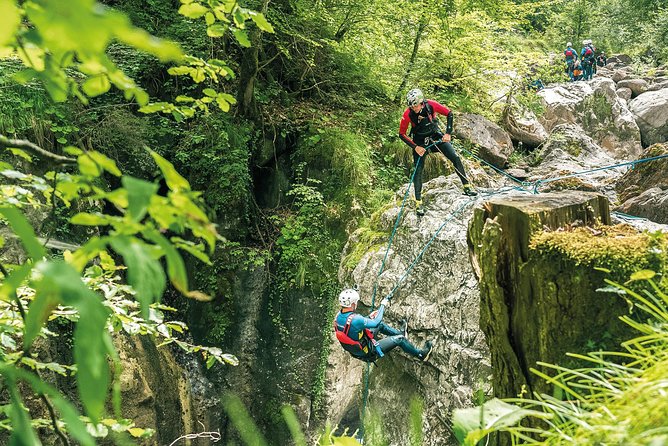
The first big moment is the 10m (33 ft) rappel. You practice the technique, then you start abseiling into the canyon and feel the vertical transition immediately. This is the part most people remember because it converts nervous energy into a clean, physical action.
What you should expect is not just “go down a rope.” You are learning how to control your body while attached to a harness, moving with the rope system while staying aware of water below. In that first rappel, the canyon walls and the flow of water are right there, so your brain is busy in a good way: one task at a time.
Cold water is the other major factor. You get a wetsuit to protect you from mountain water chill, and that is genuinely important. If you arrive expecting warm “vacation water,” you will have a rude awakening. If you arrive knowing you will feel cold at first, the wetsuit becomes comfort gear, not just a costume.
From a value point of view, this rappel is why a 3-hour tour works. You get real technical time early. You spend your effort on skill, not just walking to a pretty spot.
Jumps, chutes, and slides: how the canyon run actually flows
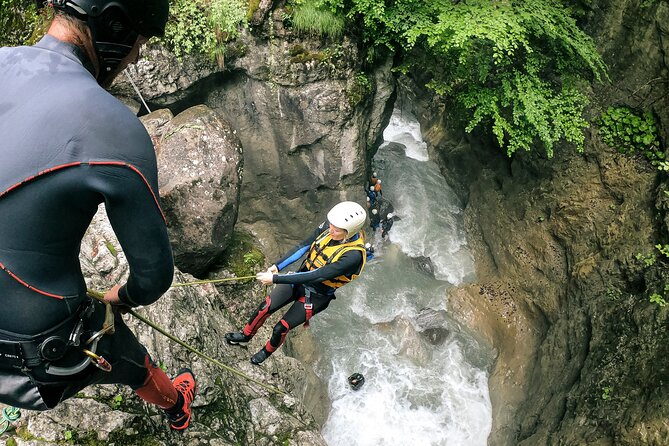
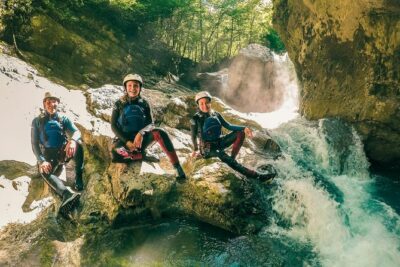
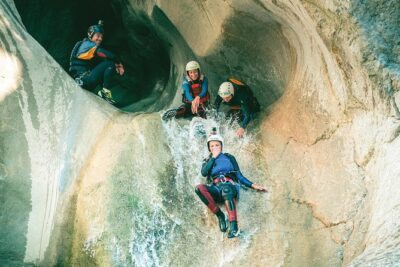
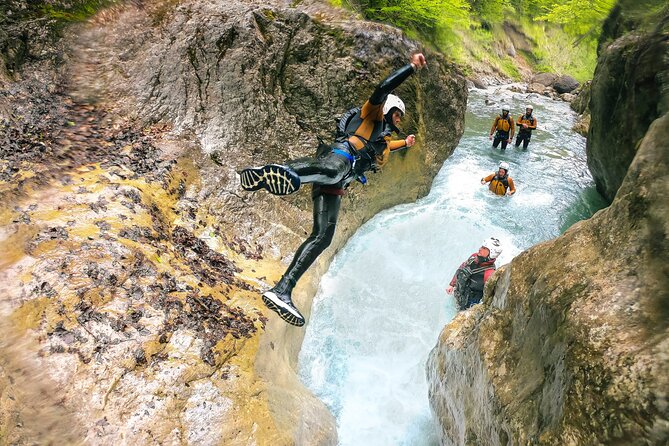
After the first rappel, the canyoning becomes a mix of scrambling, jumping, and sliding. You clamber and you hit rock ledges, with jumps described at around 20 feet (6 meters) into surging white-water pools. Those pools look intense because the water is moving and the surface can change quickly. The good news is the guide line and timing are part of the structure.
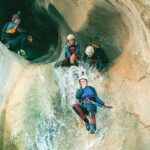
Then come the chutes and plunge pools. Slides are not always one long, carefree drop. You may slide through sections into plunge pools, which are deeper, more controlled water basins. The ride can feel like a series of “active surprises,” and that is where the fun is if you enjoy physical motion.
There is also a final slide in the second canyon. After that, you float along at your leisure through a natural channel, over a series of drops, and into a deep pool of calmer water. This downstream float is a nice contrast. You go from effort and decision-making (rope, ledge, timing) to letting the water carry you.
One extra detail from real experiences: some people mention a rope swing moment as a favorite. That may not be the same for everyone, but it is a good reminder that guides can add variety when conditions allow. So if you are hoping for more than just slides and jumps, be open to a few curveballs.
If you get nervous at any step, your guide can help you choose the line. That flexibility is one reason the tour scores so well. It keeps the day safe without turning it into a strict test.
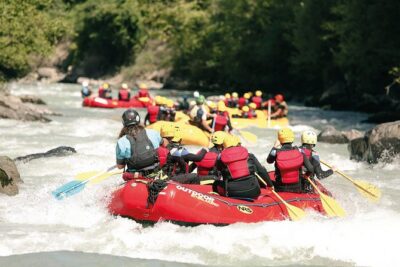
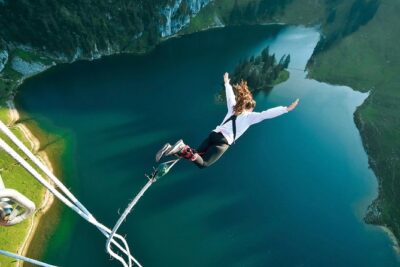
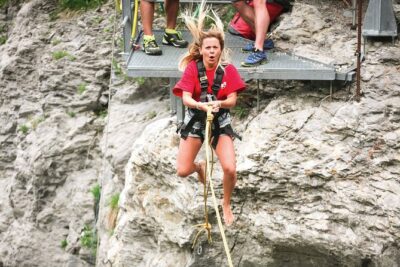
More cold water and rope work
Gear, showers, and what to pack for a comfortable return to Interlaken
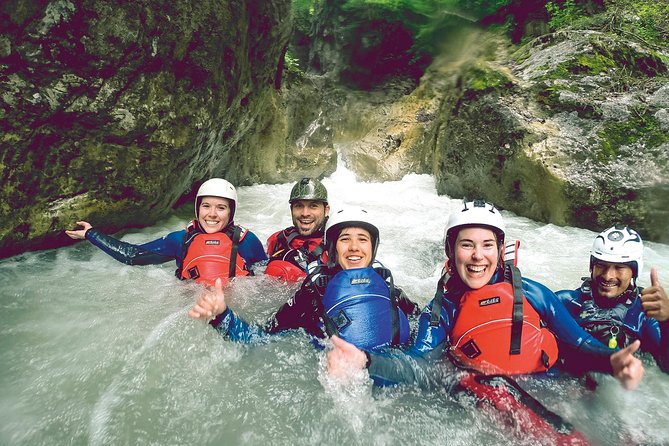
The tour includes all necessary canyoning equipment. That matters because canyon gear is not optional trivia. You need the wetsuit to handle the cold. You need the helmet and harness because the moves are vertical. You need the life jacket because you will be moving in and out of water with changing currents.
Changing rooms and hot showers are included. I cannot overstate how valuable this is after cold water play. You do not end your day shivering in wet clothes while you try to get dinner plans. You get cleaned up, dried out as much as the day allows, and given time to reset before drop-off at your accommodation or train station.
You also get a free drink after the trip. It is a small line item, but it fits the feel of the day. You work hard, you get rewarded, then you roll back to Interlaken.
What you should bring is simple and not negotiable: a swimsuit and towel. Since swimsuits are not included, I’d pack one you do not mind getting salt and canyon water on. If you have a thin towel, add a second one or bring a slightly bigger one, because you will want to dry yourself properly before getting into train-friendly clothes.
Video is an optional purchase. If you want it, plan on the cost as an add-on decision, not something included in your main price.
Price and value: why $205 feels fair for what you get
At $205.02 per person, this is not cheap, but it also is not vague. You are paying for a professional, guided canyoning experience in a high-activity Alpine environment, plus equipment, showers, and a group size capped at 24. That cap is important. In a sport like this, small groups are not just comfort, they are safety and attention.
The 3-hour time window is also part of the value. You get an intense mix of abseiling, jumps, slides, and a slower float at the end. You are not spending a whole day hiking just to do one short drop. For many people, it becomes the Switzerland highlight because it packs multiple “wow” moments into a tight schedule.
The fact that you get a safety briefing with technique practice also protects your investment. You are not just handed gear and sent down. You learn how to use the gear, how to move, and what to do when something feels surprising.
If the weather does not cooperate, you may be offered a different date or a full refund. That is the risk with outdoor adventure in the Alps. Still, from a planning angle, it is reassuring that the activity is designed for reliable operation when conditions are good.
Who should choose this canyoning trip near Interlaken
This is a strong fit if you want active adventure with guidance and you like the idea of earning adrenaline through technique. The tour is described as suitable for most travelers, and the minimum age is 12 years. That makes it a realistic choice for families with teens, and groups including college-aged visitors.
It also works well if you are new to canyoning. Many of the highest marks in real experiences come from first-timers who thought the beginner version might be less exciting. Instead, it still delivers the blood-pumping moments, just with support and alternatives when needed.
It also suits people who want a challenge without a full-day commitment. You get that “short but complete” feeling. You start with instruction, you do the big rappel, you move through technical sections, then you finish with a relaxing float and calm pool.
If you hate heights, this is still possible because the highest jump has an easy alternative. But you should be honest with yourself about the 10m rappel. That is the core of the experience. You do not have to love heights, but you do need to trust the process and follow your guide.
Finally, if you are sensitive to cold water, be prepared. The wetsuit and provided gear are designed for that, but you will still feel chilly at the start. If you can handle that, the whole day gets easier quickly.
Should you book canyoning with OUTDOOR in Interlaken?
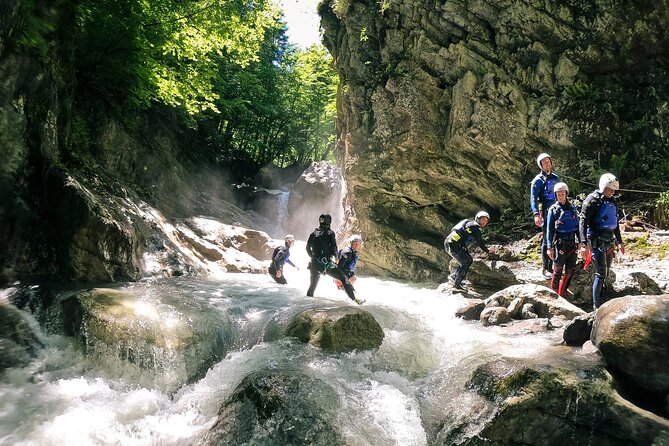
I think you should book this trip if you want a structured beginner canyoning adventure that still feels like the real deal. The mix of a 10m rappel, jumps, chutes, and slides, plus hot showers and a free drink, makes it a practical “adventure payoff” in just a few hours.
You should also book if you value small-group attention. When guides can watch everyone closely during the tricky parts, the experience stays both fun and controlled. Guides such as Andy and Gerard are repeatedly described as easy going while still keeping everyone safe, and that balance matters.
Skip this only if you know you will not handle cold water or you are not willing to follow instructions on ropes and jumps. Otherwise, this is one of the more direct ways to turn Alpine scenery into real movement.
FAQ
FAQ
How long is the canyoning experience near Interlaken?
The tour runs about 3 hours, and the full experience time is described as about 3.5 hours from start to drop-off.
What does the tour cost?
The price is $205.02 per person.
Where do you meet, and where do you return to?
The start point is Industriestrasse 17, 3812 Wilderswil, Switzerland. The activity ends back at the meeting point, and drop-off is provided in Interlaken at the end.
Is the tour offered in English, and do I get a mobile ticket?
Yes, the tour is offered in English, and you receive a mobile ticket.
What are the minimum age and weight limits?
The minimum age is 12 years. The maximum weight is 275 lbs (125 kg) per person.
What should I bring, and do I need swimming skills?
Bring a swimsuit and a towel. Basic swimming skills are an advantage but not required.
What are the main vertical elements, like the rappel and jump options?
The trip starts with a 10m (32 ft) rappel. The highest jump is 5m (16 ft), and an easy alternative is possible.
What is included in the price?
All necessary canyoning equipment, professional guides, changing rooms, hot showers, and a free drink after the trip are included. Video is available for purchase, not included.
What happens if weather is bad?
The experience requires good weather. If it is canceled due to poor weather, you will be offered a different date or a full refund.
The Rest of the Switzerland Reviews
More Water, More Rope
Deeper Into the Bernese Oberland
Just added to the Switzerland review pile
- Raclette Rafting in Interlaken
★ 3.5 · 3 reviews - Phototour Private Photoshoot in Interlaken & Lake Brienz and Thun
★ 5.0 · 3 reviews - Interlaken Full-Day Highlights Tour with a Local by Private Car
★ 4.5 · 3 reviews - Bollywood Tour Gstaad – Express Tour
★ 5.0 · 3 reviews - 1-Day Beginner Snowboard Package in Grindelwald
★ 3.5 · 3 reviews - Private transfer from Interlaken to Zurich Airport
★ 5.0 · 4 reviews
Interlaken & the Bernese Oberland next to each other.
 ★ 5.0Tandem Paragliding Experience from InterlakenFrom $2521,655 reviews
 ★ 4.5Jungfraujoch Day Trip from Zurich: Swiss Alps & Bernese OberlandFrom $3861,409 reviews
 ★ 5.0Kayak Tour of the Turquoise Lake BrienzFrom $166566 reviews
 ★ 4.5Jungfraujoch Top of Europe Day Trip from InterlakenFrom $361518 reviews
 ★ 4.5Grindelwald, Interlaken & Lauterbrunnen Day Trip from ZurichFrom $147464 reviews
 ★ 5.0Winter Kayak Tour of the Turquoise Lake BrienzFrom $202439 reviews
 ★ 4.5Grindelwald, Lauterbrunnen Lungern Interlaken Semi-PrivateFrom $292393 reviews
 ★ 4.0Swiss Alps: Interlaken and Grindelwald Day Trip from ZurichFrom $130360 reviews
Browse the lists this tour appears in