
Review · ZERMATT & THE MATTERHORN
Zermatt 2-Hour Small Group Village Walk
Car-free Zermatt is best understood on foot. In just two hours, this small-group walk strings together the village’s station arrival, historic backstreets, and classic Matterhorn viewpoints.
I especially like the small group size (max 15) and the way the guide shapes the walk around real questions, not a rigid script. I also like that the stops are simple and practical, with no admissions required, so you’re paying for local storytelling and navigation. One possible drawback: this experience runs only in good weather, and the Matterhorn view can hide behind clouds.
In This Review
- Key highlights before you go
- Why this Zermatt village walk fits so well (2 hours, max 15)
- Meeting point at the Zermatt Tourist Information Center, then off to Bahnhofplatz
- Stop 1: Bahnhofplatz, where you learn what Zermatt is built around
- Stop 2: Bahnhofstrasse, the famous shopping spine, then a quiet turn
- Stop 3: Gourmetweg, tennis court today and natural ice rink in winter
- Stop 4: Hinterdorfstrasse, old Zermatt and the flat-stone rooftop secret
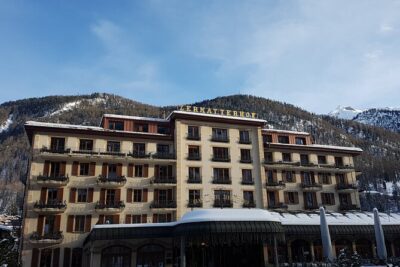
- Stop 5: Monte Rosa Hotel, where tourism growth began and Matterhorn climbing history starts
- Stop 6: Mountaineers’ Cemetery, a sober stop with real context
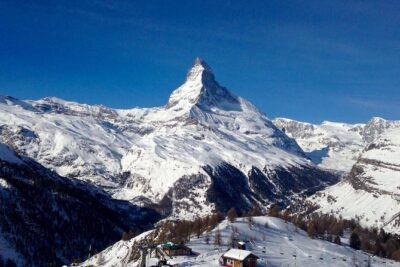
- Stop 7: Kirchbrucke bridge viewpoint, the Matterhorn photo moment
- Stop 8: Uferweg along the Vispa River, then back toward Sunnegga and the station
- Guides, pace, and why this feels like a local conversation
- Price and value: Is 140.55 for 2 hours worth it?
- What to expect physically, and who should book it
- Weather matters, because the Matterhorn view is part of the deal
- Should you book the Zermatt 2-Hour Small Group Village Walk?
- FAQ
- How long is the Zermatt 2-Hour Small Group Village Walk?
- What does the tour cost?
- Is the tour offered in English?
- How large is the group?
- Where do I meet the guide?
- Do I need to pay for entry at the stops?
- Are service animals allowed?
- What happens if the weather is bad?
Key highlights before you go
- Two hours, focused orientation so you can make sense of Zermatt quickly on your first day
- Station to backstreets route that shows both the obvious center and the calmer local lanes
- Matterhorn stories without rushing from early climbing history to the mountaineers’ cemetery
- Classic photo stop at Kirchbrucke timed for the typical Matterhorn backdrop
- Seasonal detail at Gourmetweg where a tennis court becomes a natural ice rink in winter
- Guide flexibility for questions and photos (some groups even end up very small)
More Matterhorn days from the same pile
- Private Ski Lessons – 3 hours Zermatt★ 5.0 · 279 reviews
- Matterhorn Paragliding flight in Zermatt (20-25min)★ 5.0 · 207 reviews
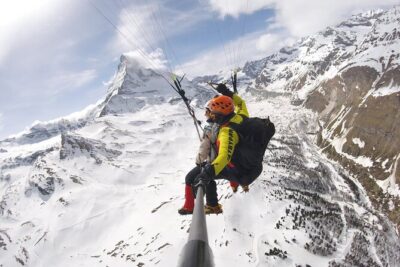
- FLYMATTERHORN VIP Paragliding from Zermatt, With Matterhorn View★ 5.0 · 192 reviews
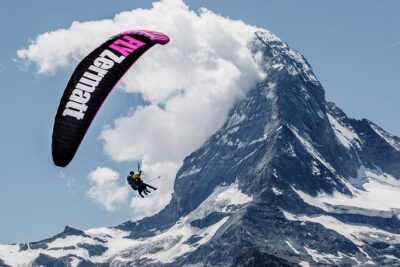
- 20 to 25 Minute Tandem Paragliding in Zermatt and Matterhorn View★ 5.0 · 40 reviews
Why this Zermatt village walk fits so well (2 hours, max 15)
Zermatt is compact, but it’s not simple. The village is car-free, and most visitors arrive with lots of questions like Where do the locals go? and What matters here beyond the shops? A guided walk solves that fast, because you’re not trying to piece together the town from a map while carrying luggage and trying to beat jet lag.
This tour is designed for short attention spans and long-lasting photos. It runs about two hours and keeps groups to 15 people or fewer, which usually means you can ask questions and still hear answers. The experience is also offered in English, and it uses a mobile ticket, which is handy when your Swiss planning list is already busy.
The sweet spot is that you get a “big picture” route plus enough detours to feel like you found something yourself. And since the route is entirely on foot, you can enjoy the pace without the stress of changing buses or taxis.
Meeting point at the Zermatt Tourist Information Center, then off to Bahnhofplatz
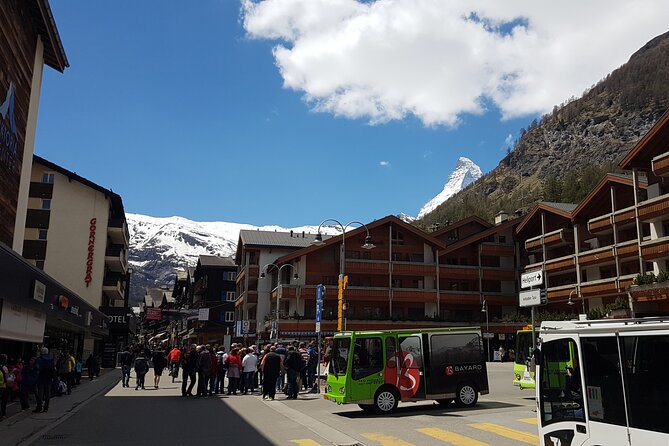
You’ll meet at the Zermatt Tourist Information Center, Bahnhofpl. 5, right near the heart of the rail arrival area. Zermatt’s train station is the only way into town for both travelers and goods, so starting here instantly makes sense. You’re basically getting an orientation lecture in motion, with the town’s main gateway right under your feet.
If you’re the type who likes to ask practical questions early, this is good timing. A quick start point also helps you avoid the common first-day mistake of spending an hour wandering in the wrong direction. And because it’s near public transportation, it’s easy to fold into your day even if you’re coming from somewhere else in the region.
Stop 1: Bahnhofplatz, where you learn what Zermatt is built around
You begin at Bahnhofplatz, the square by the station. The guide starts by setting context for how Zermatt works, especially the fact that the station is the key entry point. That one detail changes how you read everything else you see after.
This is also a moment for “calibration.” You’ll look around and get your first sense of where the village’s main paths lead. In the best case, you’ll catch glimpses of mountain presence through the town’s view corridors, and if not, that’s okay. You’re still getting the route logic that will help later when you’re aiming for viewpoints.
A couple of reviews highlight this kind of practical confidence: guides were on time and adjusted pace so people could keep up comfortably. That matters in Zermatt, where cobbles and slopes can surprise you if you’re rushing.
Stop 2: Bahnhofstrasse, the famous shopping spine, then a quiet turn
Next you walk along Bahnhofstrasse, Zermatt’s best-known shopping street. It’s the part most people recognize immediately, so it works as a “public-facing Zermatt” introduction. You’ll see the commercial side of town first, which makes the contrast later more meaningful.
Then you turn left, away from the busiest areas. This quiet shift is exactly what I look for in a town walk. If you only stay in the obvious center, you end up with souvenirs and photos but not much understanding.
At this point, the walk starts doing more than just moving you forward. You’re learning what kind of streets Zermatt has, how locals and visitors experience the town differently, and where the tourist crowd thins out naturally.
Other Swiss towns covered on foot
Stop 3: Gourmetweg, tennis court today and natural ice rink in winter
At Gourmetweg, you’ll spot the tennis court area that changes character depending on the season. In winter, it can become a natural ice rink. That’s a fun, very Zermatt detail because it shows how everyday infrastructure adapts to alpine weather.
You’ll also get a look at modern architecture in newer sections of Zermatt. This matters because Zermatt isn’t only old timber and century-old roofs. It’s a living village that has changed alongside tourism and mountain life.
If you’re traveling outside peak winter season, you’ll still appreciate the point the guide is making. Zermatt’s identity is tied to the mountains, but the built environment evolves with how people live here now.
Stop 4: Hinterdorfstrasse, old Zermatt and the flat-stone rooftop secret
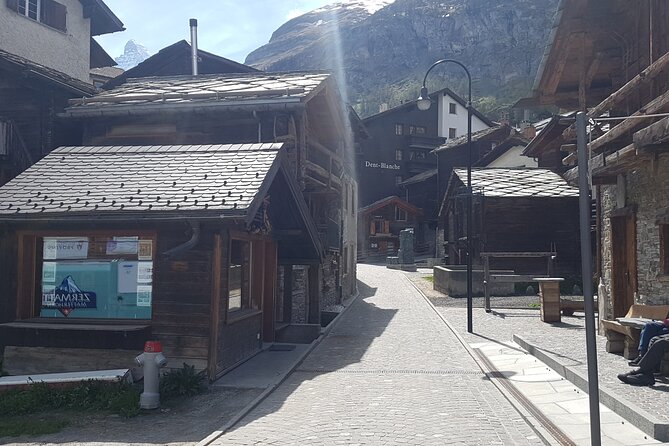
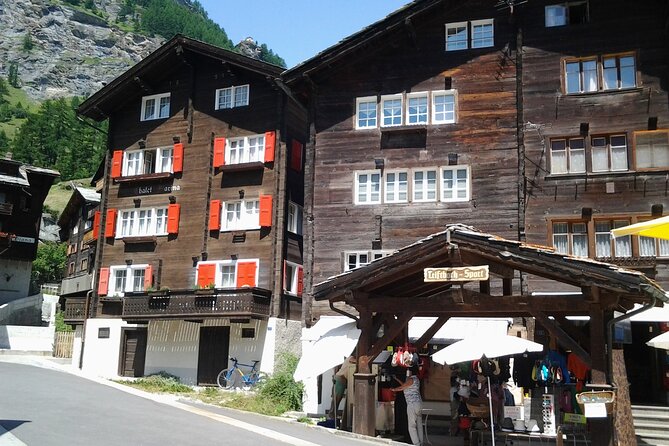
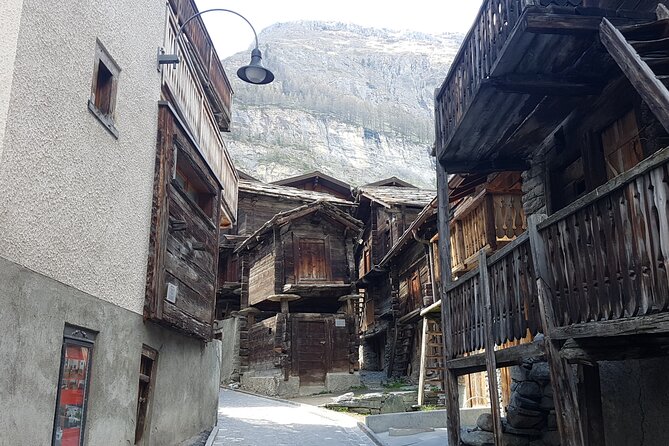
This is where the walk slows down in your mind, because the vibe changes. Hinterdorfstrasse is part of the older section of town, where buildings reflect how the village was constructed for generations. You’ll move through narrow passages and small alleyways that feel more sheltered than the shopping street.
The guide shares the “secret” behind the flat-stone rooftops. Even if you’ve seen flat roofs before, in the context of Zermatt’s architecture it becomes a practical story, not just a design feature. Roof shapes in alpine towns are never random, because snow, weather, and maintenance all matter.
You’ll also see barns that are over 200 years old. That age gives you a strong sense of continuity, and it helps explain why people come to Zermatt not only for the Matterhorn, but also for the feel of a town that has endured.
One warning: the old alley sections can feel a bit tighter and more “turny” than the main streets. If you’re in a hurry, you might want to remind yourself that this is the payoff part of the walk.
Stop 5: Monte Rosa Hotel, where tourism growth began and Matterhorn climbing history starts
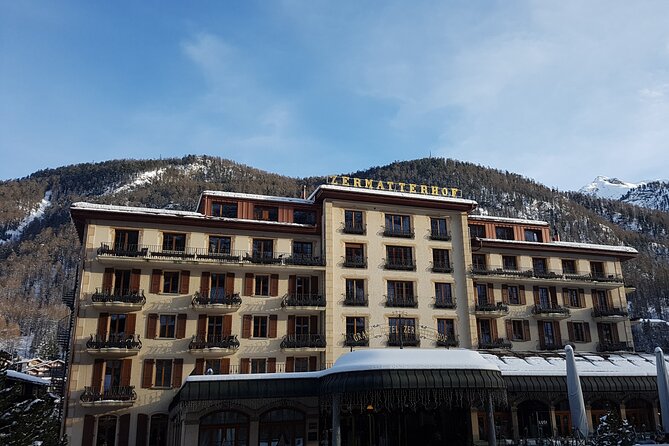
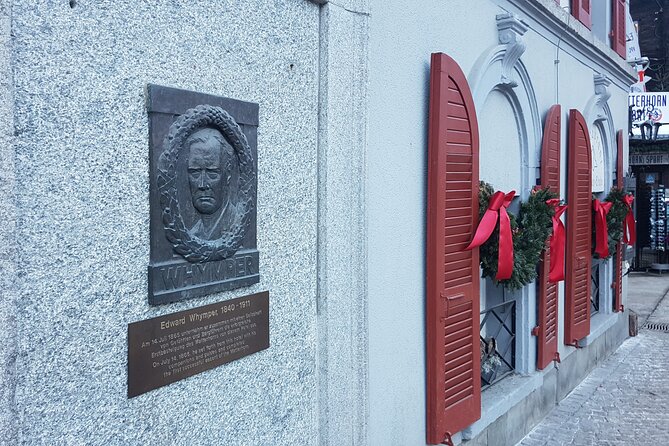
At Monte Rosa Hotel, the story turns toward the mountains. This stop is described as a place tied to how Zermatt’s tourism “started to grow,” which is a big deal here. Tourism in Zermatt is not a recent invention. It’s linked to centuries of interest in climbing and alpine exploration.
You’ll also hear insights connected to the first ascent of the Matterhorn. That’s the heart of Zermatt’s mountain identity, and the guide’s framing helps you connect the town streets to the climbing history.
In a few reviews, guides did more than walk and talk. One guide even helped guests plan around a nearby Matterhorn Museum, and another supported ticketing for an observation area afterward. You don’t have to take up those suggestions, but it’s reassuring when the guide can point you toward smart follow-ons while the theme is still fresh in your head.
Stop 6: Mountaineers’ Cemetery, a sober stop with real context
Next comes Mountaineers’ Cemetery. This isn’t a cheerful postcard stop, and it shouldn’t be. It’s the cemetery of mountaineers who failed while climbing the Matterhorn or surrounding alpine peaks.
I like that this walk does not treat the mountains like an amusement ride. The cemetery adds weight to the earlier stories and helps you understand why alpine towns have traditions of respect and remembrance.
If you’re the type who prefers upbeat only, consider this a “necessary pause.” It’s also one of the stops where the guide’s pacing and tone really matter. You’ll likely want a quiet minute here, even if you keep moving.
Stop 7: Kirchbrucke bridge viewpoint, the Matterhorn photo moment
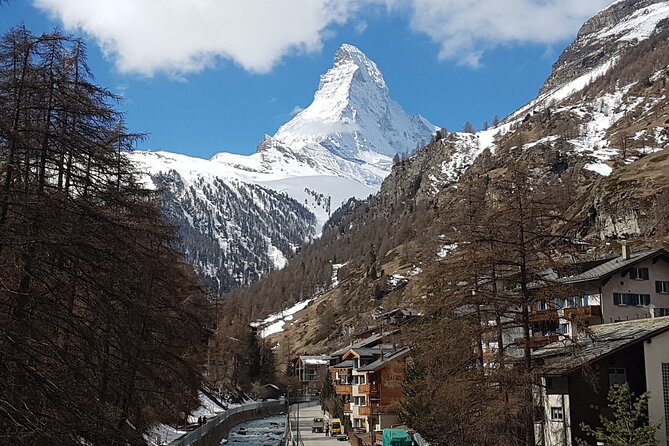
At Kirchbrucke bridge, you get a viewpoint built for the classic Zermatt picture, with the Matterhorn in the background. This is where the town walk turns into a memory-maker.
The challenge is weather. One review specifically noted seeing the Matterhorn through clouds. That matches what I’d plan for mentally: you might get a clean view, or you might get partial glimpses, and either can still be striking.
What makes this stop worthwhile is that it’s not random. The earlier stops help position you mentally, so your eyes know what to look for when you reach the bridge viewpoint.
Stop 8: Uferweg along the Vispa River, then back toward Sunnegga and the station
The final stretch is Uferweg, walking alongside the Vispa River. This part is a nice change from dense street scenes. You’ll pass hotels and newer apartments, which helps you see how Zermatt accommodates modern guests without abandoning the town’s core rhythm.
You’ll also pass the Sunnegga cablecar station, which is another useful marker for future planning. After that, you head back along Getwing street toward the train station to end the tour.
This ending is practical. You’re not dropped into a far corner where you need to figure out your exit. You return to the station area, and the “how do I get out of town” question is already answered in your head.
Guides, pace, and why this feels like a local conversation
The most praised aspect across the experience is the guides themselves. People mention English that’s easy to follow, frequent picture stops, and the fact that the guide happily answered questions. Names that came up include Abraham, Remi, Tony (Anton Imoberdorf), Mike, and Anton Imoberdorf in references to Tony.
A strong guide also affects pacing. Several reviews point out that the guide matched the group’s pace and kept things easy to understand. In a place like Zermatt, where streets can require attention underfoot, that matters more than people expect.
Small group size plays into this too. One couple described being just the two of them, which made the walk feel intimate rather than crowded. If you care about interaction, this structure helps.
Price and value: Is 140.55 for 2 hours worth it?
At $140.55 per person for about two hours, you’re paying for expert guidance, local context, and an efficient route. The value improves because the tour includes multiple meaningful stops without admission fees, and the guide does the interpretation that you would otherwise miss if you walked alone.
Two things make the cost feel more reasonable than a generic “see the sights” stroll:
- You get coverage across old town charm and mountain-focused history, all in one loop.
- You get photo help and question time, not just a list of landmarks.
Also, the group limit matters for the price. A small group with real conversation is different from a packed mass tour. If you end up with fewer people, the same guide time becomes more valuable for each person.
What to expect physically, and who should book it
This is a walking tour, and it’s described as easy for most travelers. Since Zermatt has no cars moving through town in the way you might expect elsewhere, it’s generally a comfortable environment for pedestrians.
Still, keep this in mind:
- Children must be accompanied by an adult, so plan on staying close.
- Most travelers can participate, but if you’re managing mobility issues, consider that the route is walking-focused.
- The experience is capped at 15 travelers, which is great for atmosphere.
If you’re visiting Zermatt for the first time, this walk is one of the fastest ways to build confidence. It gives you a “mental map” so the rest of the day feels simpler. If you’ve been before, it can still help because it adds stories and architectural details that are hard to spot on your own.
Weather matters, because the Matterhorn view is part of the deal
This tour requires good weather. That’s not a footnote, it’s central to what you’ll enjoy most. Even if you don’t get a perfectly clear Matterhorn silhouette, you’ll still learn plenty, but the viewpoint stop works best when visibility is good.
If you schedule this for your first full day, you’ll benefit most. One review noted that doing it early helped them already understand parts of the town from arrival. I agree with that strategy because it reduces decision fatigue. After the walk, you can plan cable cars, museums, and meals with more confidence.
Also, if you arrive with clouds in the forecast, don’t assume the day is ruined. Partial views can still be memorable, and the guided stops help you make the best of what you see.
Should you book the Zermatt 2-Hour Small Group Village Walk?
Book it if you want a quick orientation with real depth, without making your whole day about logistics. This is a smart choice for first timers because it connects the train arrival to historic alleys, mountain climbing legacy, and the classic viewpoint. I’d also book it if you like asking questions and getting answers in plain, practical language, especially since groups stay small.
Skip it only if you strongly dislike walking or you’re traveling on a day when weather is uncertain and you’d rather risk a standalone activity instead. Because the Matterhorn viewpoint is weather-dependent, you’ll enjoy the experience more when you can see the mountains.
Overall, for 2 hours, small group, English, and a route that mixes everyday Zermatt life with Matterhorn context, this walk offers solid value.
FAQ
How long is the Zermatt 2-Hour Small Group Village Walk?
It lasts about 2 hours.
What does the tour cost?
The price is $140.55 per person.
Is the tour offered in English?
Yes, it is offered in English.
How large is the group?
The tour has a maximum of 15 travelers.
Where do I meet the guide?
You meet at the Zermatt Tourist Information Center, Bahnhofpl. 5, 3920 Zermatt, Switzerland. The tour ends back at the meeting point.
Do I need to pay for entry at the stops?
Admission is listed as free for the stops in the walk.
Are service animals allowed?
Yes, service animals are allowed.
What happens if the weather is bad?
This experience requires good weather. If it is canceled due to poor weather, you will be offered a different date or a full refund.
Switzerland on Foot
The Rest of the Switzerland Reviews



Zermatt, Past the Postcard
Just added to the Switzerland review pile
- Zermatt Village Walk and Glacier Paradise Private Day Trip
★ 5.0 · 4 reviews - Guided Hiking Full Day in Zermatt
★ 5.0 · 5 reviews - Zermatt’s Alpine Charms – Private Guided Village Tour
★ 5.0 · 6 reviews - Zermatt Guided Day Hike
★ 5.0 · 6 reviews - Private Mystic Zermatt Tour: Peaks, History & Culture
★ 4.5 · 6 reviews - Klein Matterhorn and glacier trail private full day hike
★ 5.0 · 7 reviews
Zermatt & the Matterhorn next to each other.
 ★ 5.0Private Ski Lessons – 3 hours ZermattFrom $432279 reviews
 ★ 5.0Matterhorn Paragliding flight in Zermatt (20-25min)From $399207 reviews
 ★ 5.0FLYMATTERHORN VIP Paragliding from Zermatt, With Matterhorn ViewFrom $452192 reviews
 ★ 4.5Zermatt & Mt. Gornergrat Small Group Day Trip from ZürichFrom $75672 reviews
 ★ 5.020 to 25 Minute Tandem Paragliding in Zermatt and Matterhorn ViewFrom $37040 reviews
 ★ 5.0HALF DAY 3-Hour Private Ski Lessons in Zermatt, SwitzerlandFrom $38338 reviews
 ★ 4.5Day Tour to Zermatt Matterhorn and Glacier Paradise from GenevaFrom $23135 reviews
 ★ 5.0VIP Ski or Snowboard Lesson – Full Day ZermattFrom $85635 reviews
Browse the lists this tour appears in