

Review · ZURICH TOURS & DAY TRIPS
Self-Guided Audio City Tour in Zurich
Zurich, but with stories in your headphones. This self-guided audio route strings together big landmarks and small details for $13.29 in English, and you get mostly free admission along the way. It is the kind of walk that helps the city make sense fast, even if it is your first day.
The only real catch is tech. You supply your own phone, internet, and headset, and there is no live guide to troubleshoot on the spot. If your connection is shaky, the audio can restart, and the whole loop can run longer than the 2 to 3 hour estimate if you take it slow.
In This Review
- Key highlights you will feel right away
- How the Zurich audio tour works, and where you begin
- Old Town intro: Alfred Escher, Pestalozzi, and the Urania Observatory
- Lindenhof Hill: views, small monuments, and old stones
- St. Peter’s Church and the clock face you cannot ignore
- Thermengasse Roman baths, Rathaus politics, and Weinplatz guild buildings
- Cabaret Voltaire and Lenin: Zurich as a refuge for ideas
- Grossmünster, Wasserkirche, and the stained glass you will remember
- Opera House, sculptures, and the civic art you can spot from the street
- Fraumünster, Chagall stained glass, and the CHF 5 decision
- Paradeplatz, Augustinerkirche, and the quiet-to-modern finish
- Price and value: is $13.29 actually a good deal?
- Practical tips so the audio walk stays smooth
- Should you book this Zurich self-guided audio city tour?
- FAQ
- How long does the self-guided Zurich audio tour take?
- What language is the audio guide in?
- Is there a live guide during the tour?
- What do I need to use the audio tour?
- Where does the tour start and end?
- Are there any paid stops?
- What is included in the price?
- Are admissions free at the other stops?
- What is the cancellation policy?
Key highlights you will feel right away
- English audio by a professional speaker, with directions plus photos to keep you moving
- Free stops most of the way, with Fraumünster inside costing CHF 5 if you want to go in
- Views with context from Lindenhof Hill, paired with nearby monuments and old-town stops
- Reformation and art stops grouped together, so the church stories land with impact
- Self-paced walking, with the option to pause, re-listen, or skip anything you do not want
- A written transcript is available along with the audio, helpful when you want to read instead of listen
More Zurich, walked and written up
- Mount Titlis and Lucerne Day Trip from Zurich★ 4.5 · 1,960 reviews
- Heidiland and Liechtenstein Tour from Zurich★ 4.0 · 1,745 reviews
- Jungfraujoch: Top of Europe Day Trip from Zurich★ 4.5 · 1,647 reviews
- Jungfraujoch Day Trip from Zurich: Swiss Alps & Bernese Oberland★ 4.5 · 1,409 reviews
How the Zurich audio tour works, and where you begin

This is a private, self-guided experience, meaning it is just your group. There is no live guide meeting you on a schedule, so you control the pace. The plan is an easy Old Town loop with a set start point and a set finish point, both in central Zurich.
Start location: Bahnhofplatz, Alfred Escher-Denkmal, 8001 Zürich.
Finish location: next to the Pavillon-Skulptur von Max Bill (1983 (#KiöR)), Bahnhofstrasse 47, 8001 Zürich.
You access the tour link after booking, and you use it on your mobile phone with a working internet connection and headset. You also get route support with photos and detailed directions, which matters in Zurich, where streets can feel similar if you zone out for even a minute. If you want to avoid getting turned around, I recommend you keep your screen handy and check street names at every turn.
One more practical note: plan for walking time and phone power. You will likely want a fully charged battery before you set out, because the audio plus navigation can drain fast. I also like that there is flexibility built into the format, so you can spend longer where you care most and move on quickly where you do not.
Old Town intro: Alfred Escher, Pestalozzi, and the Urania Observatory
The route kicks off with a monument to Alfred Escher. You are not just looking at a statue. The narration connects him to the Swiss economy and the railway system, so you understand why this man shows up as a public figure in Zurich’s civic landscape.
Next comes Pestalozzianlage, focused on Johann Heinrich Pestalozzi. The emphasis is on enlightenment and education, so you get a different kind of “Zurich origin story” than politics or religion. It is a nice reset before the day shifts into church architecture and Reformation landmarks later.
Then you head toward Urania Observatory for a quick stop that puts the cosmos into the mix. Even if you are not going inside, the stop works because it breaks up the historical concentration with a science-themed pause.
Tip for pacing here: these first moments are short, so do not overthink them. Use them to get your audio running smoothly and get your bearings for the longer stretches ahead.
Lindenhof Hill: views, small monuments, and old stones
Lindenhof Hill is one of the best early “wow” moments on this route. You climb just enough to feel the viewpoint difference, and you get a strong overlook of Zurich and the Limmat River.
The audio context helps you notice things you might otherwise miss:
- The story behind the Hedwig Fountain
- What is going on near the Masonic Lodge facade
- A quieter, somber detail at the Tombstone of Lucius Aelius
This is a great section to slow down slightly, even though the stop time is short. Views are one thing, but having names and meaning attached to the view makes it feel earned, not accidental.
If you are the type who reads every plaque and takes photos from multiple angles, expect your timing to stretch here. That is not a problem, just plan for it.
St. Peter’s Church and the clock face you cannot ignore
At St. Peter’s Church, the focus turns to Zurich’s older roots. The narration frames it as the city’s oldest parish church. Then your attention goes straight to the iconic clock face, described as one of the largest in Europe.
Inside, the vibe is about calm and age. This is not the loudest stop on the route, but it can be a breath of quiet after walking through streets that feel busy even when you are moving slowly.
What to watch for: the outside clock is the headline, but the payoff is when you step in and let the scale and stillness do their job. If you have headphones on, keep the audio at a comfortable volume, so you can still hear the space.
More Swiss days with a guide attached

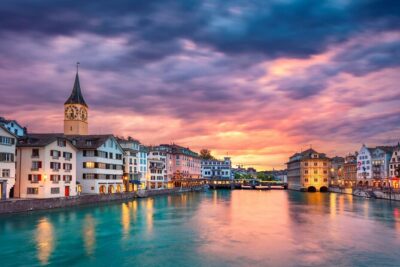
Thermengasse Roman baths, Rathaus politics, and Weinplatz guild buildings
Zurich does not only feel medieval. It has Roman traces right in the modern city. The Thermengasse stop points you to remnants of ancient Roman baths, a reminder that people have used this area for a very long time.
Then the tour moves to Town Hall (Rathaus), where the theme becomes political heritage. The building is short on time, but the narration helps you see it as part of Zurich’s civic identity, not just another impressive facade.
Later, you end up around Weinplatz for the Millers’ and Bakers’ Guild Building. This stop is about how everyday work groups shaped the city, which is one of my favorite ways to understand Zurich. You start seeing it less as a place you pass through, and more as a place built by institutions.
If you prefer history that connects to daily life: you will enjoy these stops because they shift from big personalities to the structures that ran society.
Cabaret Voltaire and Lenin: Zurich as a refuge for ideas
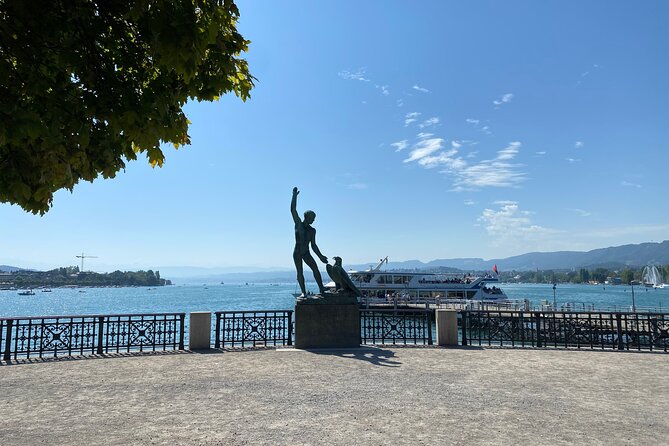
Two of the most surprising stops are Cabaret Voltaire and the Lenin Apartment Zurich.
At Cabaret Voltaire, the narration ties the venue to the birthplace of the Dada movement, a shockingly creative counterpoint to the solemn churches and civic buildings nearby. Even on a quick visit, it helps you understand how Zurich could be a place where artists and writers challenged norms.
Then the route takes you to Lenin’s quarters during political exile. This is not presented as a scandal highlight. It is framed as a place where he found refuge and reflected on ideas that later influenced history.
Put those two stops together and Zurich starts to look like something more than a tidy, financial city. It becomes a crossroads for radical thought, art, and politics.
Grossmünster, Wasserkirche, and the stained glass you will remember
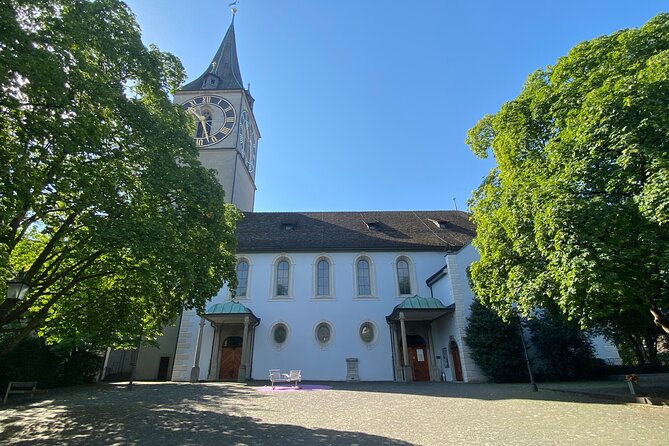
Now the route turns squarely toward religious architecture and the Protestant Reformation story.
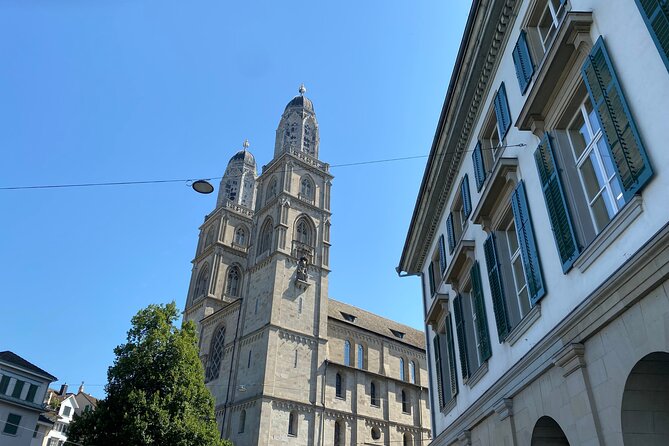
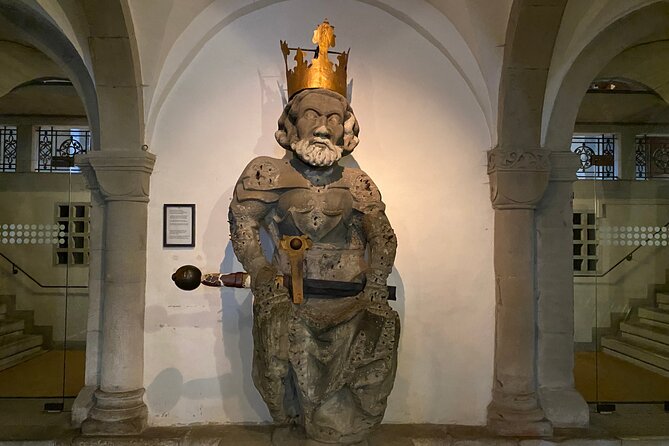
At Grossmünster, you see the famous twin towers. The narration connects the church to the Swiss Reformation, and then it zooms in on something you can actually look at closely: the stained glass by Augusto Giacometti. This is one of those moments where you notice color patterns faster than you realize you are learning, because the design pulls you in before the facts fully land.
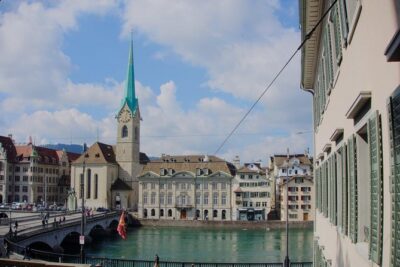
Next is Wasserkirche, also along the Limmat River, and the emphasis stays on stained glass. Each window is described as telling a different story, so it feels less like “a church window” and more like a guided walk through scenes.
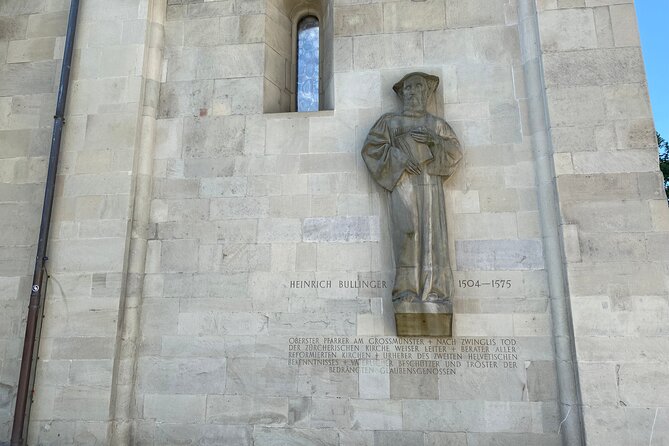
Between the churches, you also pass the Ulrich Zwingli Monument, a tribute to the key reformer Ulrich Zwingli. That placement matters. It gives you a name for the reformation narrative, so the churches do not feel isolated. They connect to people and belief shifts, not just buildings.
Opera House, sculptures, and the civic art you can spot from the street
After churches, the tour shifts into public culture.
The Opernhaus Zurich stop points out the facade with busts of composers and writers, a subtle reminder that Zurich treats the arts as part of public identity. You may not go inside here, but the exterior details are enough to make the stop worthwhile.
Then there is Ganymed, a sculpture tied to the mythological narrative. It is short on time, but it gives you a chance to pause and notice how Zurich sprinkles art into its streetscapes.
Later, you will also see the Hans Waldmann Statue. This one adds emotional weight to the walk. The narration explains his rise from humble beginnings to burgomaster, then his tragic ending, including his sentencing to death. Again, the stop time is brief, but the story gives you something to think about while you are still in motion.
Fraumünster, Chagall stained glass, and the CHF 5 decision
Fraumünster is a big anchor of the tour, especially if you love stained glass. The narration focuses on the Marc Chagall windows, and how sunlight makes the colors feel almost alive.
Here is the practical decision point:
Fraumünster interior entry is not included, and if you go inside, you should expect a CHF 5 fee per person.
If you are trying to keep costs low, you can still appreciate the church from outside. But if you are already paying attention during the reformation and church stops, this is the one place where inside viewing is most likely to be worth it. The narration’s emphasis on the windows tells you the experience is meant to be seen up close, not guessed at from a street corner.
A small heads-up on timing: church visits can stretch your day. Keep that in mind if you are on a tight schedule.
Paradeplatz, Augustinerkirche, and the quiet-to-modern finish
As you move forward, you reach Paradeplatz, Zurich’s financial district. The narration frames it as the city’s commerce hub, so you can feel the shift from ideology and religion to modern power and business.
Next is Augustinerkirche, presented as humble and quiet. This stop works as a decompression moment. After busier areas, it offers a calmer tone without needing a long visit.
Then you land at the Max Bill Pavillon-Skulptur (1983 #KiöR) area near the end point. The narration links the design to themes of transparency, equality, and freedom. It is a good way to wrap the walk, because it returns to ideas, but through modern design rather than monuments and churches.
Finally, you finish close to the Weinplatz area for the Millers’ and Bakers’ Guild Building stop, keeping the “how society worked” thread running right to the end.
Price and value: is $13.29 actually a good deal?
For $13.29 per person, you are buying more than a few audio clips. You are getting:
- a structured route through major sights
- English narration
- photo-based directions to help you find each stop
- mostly free entry at the landmarks along the way
- the ability to set your own pace, pause when you care, and keep moving when you do not
In Zurich terms, where paid attractions add up quickly, this format is strong value. The only common extra cost baked into the tour is the Fraumünster inside visit at CHF 5, and you control whether you take it.
The main “cost” is your device time. You need a working phone plus internet and headset, so if your battery is low or your connection is unreliable, you may feel the savings turn into frustration. That is why I treat this tour like a good plan if you travel prepared.
Practical tips so the audio walk stays smooth
Here are the few things that most often make or break the experience:
- Start with a charged phone. If the battery drops, both the map and the audio can suffer.
- Carry a basic headset you actually like. The narration is the product, so audio comfort matters.
- If the audio starts over, it is usually tied to connection issues. Try stepping to a more open area if you are in a spot with spotty signal.
- Use the photos in the directions. When street signs are hard to spot, the visuals help you confirm you are on the right turn.
- If you want to go slower, you can. This is the point of self-guided, and it can run past the 2 to 3 hour estimate if you take more time at viewpoints and inside stops.
One nice extra: there is a written transcript available, so you can switch between listening and reading when you want to. That flexibility is great if you are walking at a slow city pace or if you simply get tired of audio after a while.
Should you book this Zurich self-guided audio city tour?
Yes, if you want a low-cost, structured way to cover the highlights without being tied to a group schedule. It is especially good for first-timers who want Old Town orientation, plus anyone who likes history that mixes politics, religion, art, and everyday civic life.
I would skip it if you hate tech-dependent tours. If you already know your phone battery always dies early, or you dislike depending on mobile internet, you may have a tougher time than you expect. Also, if you only want inside visits at churches and paid museums, this route is mostly about seeing and learning from the streets and exteriors, with Fraumünster inside as the main paid option.
If you want value and control, this tour hits a good sweet spot. You walk a lot, you learn a lot, and you finish in the cultural modern zone near Max Bill, with Zurich feeling more like a connected story than a checklist.
FAQ
How long does the self-guided Zurich audio tour take?
The duration is listed as about 2 to 3 hours.
What language is the audio guide in?
The audio guide is offered in English.
Is there a live guide during the tour?
No. This is self-guided, so there is no live guide. You use the tour link provided after booking.
What do I need to use the audio tour?
You need your own mobile phone, plus internet access and a headset. The tour uses a mobile ticket.
Where does the tour start and end?
It starts at Bahnhofplatz, Alfred Escher-Denkmal, 8001 Zürich. It ends next to the Pavilion Sculpture of Max Bill at Bahnhofstrasse 47, 8001 Zürich.
Are there any paid stops?
Yes. Fraumünster Church interior is not included. If you go inside, the entrance fee is CHF 5 per person.
What is included in the price?
Included features are the visit to the main tourist attractions, the high-quality audio guide recorded by a professional speaker, and clear route explanations with photos and detailed directions.
Are admissions free at the other stops?
Most other stops are listed as admission free. Fraumünster inside is the notable exception listed as not included.
What is the cancellation policy?
You can cancel for free up to 24 hours in advance for a full refund. If you cancel less than 24 hours before the start time, the amount paid is not refunded.
More Guided Swiss Outings


The Rest of the Switzerland Reviews


Zurich, A Few More Ways In
Just added to the Switzerland review pile
- Experience Swiss Countryside on a Private Tour by Car from Zurich
★ 5.0 · 3 reviews - Winterthur Foxtrail Rosalie
★ 5.0 · 3 reviews - Wakeboarding Lake Zurich – afternoon !
★ 5.0 · 3 reviews - Private Luzern and Mount Titlis Experience in Swiss Splendor
★ 5.0 · 3 reviews - Jungfrau, Top of Europe & Interlaken Small group from Zurich
★ 4.5 · 3 reviews - Private Arrival Transfer: from Zurich Airport to Bern City
★ 5.0 · 3 reviews
Zurich Tours & Day Trips next to each other.
 ★ 4.5Mount Titlis and Lucerne Day Trip from ZurichFrom $2151,960 reviews
 ★ 4.0Heidiland and Liechtenstein Tour from ZurichFrom $1201,745 reviews
 ★ 4.5Jungfraujoch: Top of Europe Day Trip from ZurichFrom $3801,647 reviews
 ★ 4.5Jungfraujoch Day Trip from Zurich: Swiss Alps & Bernese OberlandFrom $3861,409 reviews
 ★ 4.0Best of Zurich Tour with Felsenegg Cable Car and Ferry RideFrom $861,229 reviews
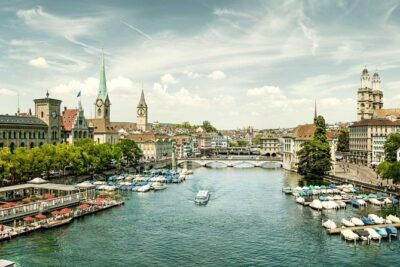 ★ 4.0Zurich Sights: Cruise, Lindt Chocolate and optional FIFA TicketFrom $1081,028 reviews
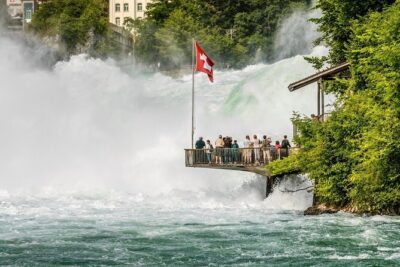 ★ 4.5Rhine Falls and Stein am Rhein Half-Day Tour from ZurichFrom $108716 reviews
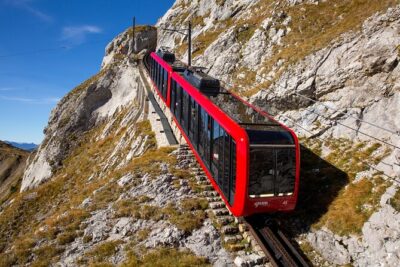 ★ 4.5Mt Pilatus and Lucerne Day Trip from Zurich With Lake CruiseFrom $250694 reviews
Browse the lists this tour appears in