
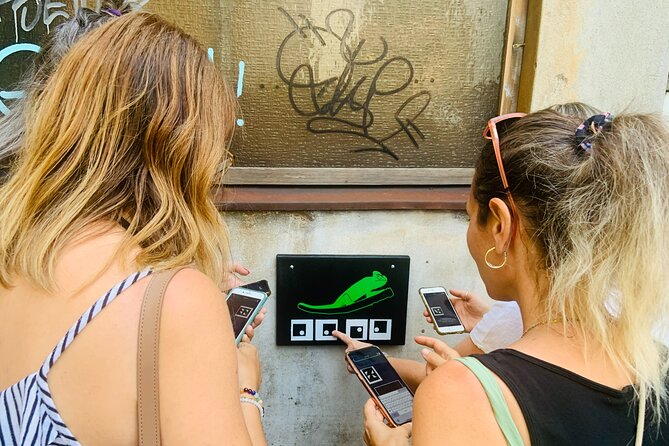
Review · FOXTRAIL, ESCAPE GAMES & SCAVENGER HUNTS
Sato Code Escape Room across Zug
Zug turns into a puzzle map fast. This citywide escape game sends you hunting for clues in shops and streets, then asks your team to piece them together into codes. I like that it stays fun and practical, using real locations you can actually see, like the walk toward St. Oswald Church.
What I really love is the mix of challenge and city walking. You are not just scanning QR codes on a bench, you are cracking symbol clues, decoding messages, and solving puzzles that get tougher as you go. Another strong point is how the game pushes you to pay attention to places you might otherwise skip, including stops like a record store and even a pizzeria.
One consideration: this is not a casual stroll. It is aimed at teens and adults, and you will need two people with one smartphone each plus a working internet connection on every phone.
In This Review
- Key highlights in plain terms
- Why a citywide escape game in Zug is better than standard sightseeing
- Meeting at Metalli Zug and getting your team ready
- The Zug route: from station area past lake views, Burg Castle, and St. Oswald Church
- How the Sato Code App turns locations into puzzles
- Difficulty level, age guidance, and who this fits best
- Price and value: what $17.48 buys you in real Zug time
- Practical tips to keep your team moving and not stuck
- Should you book Sato Code Escape Room across Zug?
- FAQ
- How long does the Sato Code Escape Room across Zug take?
- Where does the game start and end?
- What is the minimum group size?
- Do I need a smartphone for each player?
- Is internet required during the game?
- How do I get my tickets?
- What age is it recommended for?
- Where in Zug does the route go?
- What are the opening hours?
- Is cancellation free?
Key highlights in plain terms
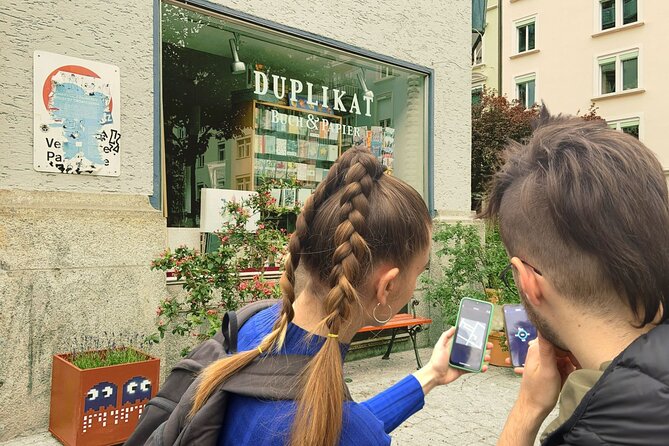
- City streets, shops, and codes: a dozen clues spread through Zug, not a single sealed room.
- Phone team setup matters: each player gets different info in the Sato Code App, so teamwork is required.
- Real Zug landmarks on the route: you walk from near the station toward St. Oswald Church.
- Puzzle difficulty ramps up: expect progressively tougher tasks that reward focus.
- You see less-obvious corners: the hunt nudges you toward spots that feel off the usual checklist.
- About 1 hour of active time: enough to feel like an adventure without eating your whole day.
More trails, clues and city puzzles
- Zug Scavenger Hunt and Sights Self-Guided Tour★ 5.0 · 5 reviews
Why a citywide escape game in Zug is better than standard sightseeing
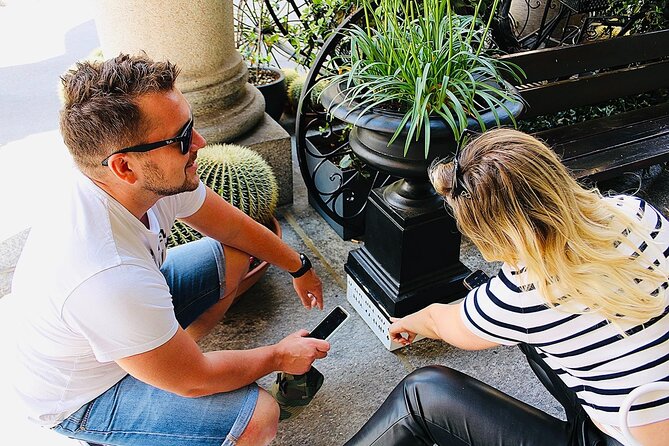
If you think an escape room has to mean one dark chamber and plastic props, Sato Code across Zug changes that. Here, the “room” is the old town streets and the commercial blocks around them. That shift matters because your brain stays engaged while your eyes actually travel, so the hour feels like both a game and a guided route you can repeat later.
You are chasing a storyline made of small actions: find a clue, connect it to something you already saw, and then enter a code or message as your team builds momentum. The best part is the way objects act like puzzle pieces. A symbol you notice in one place can point you to a code elsewhere. It is puzzle-first, not a history lecture, but that makes it a nice fit alongside normal sightseeing.
One more value note: you get to do this as an active afternoon plan. In a compact city like Zug, walking between points feels efficient, and you do not lose time to bus schedules or long transit hops. Instead, you keep moving, stop often to compare notes, and still cover meaningful ground.
Meeting at Metalli Zug and getting your team ready
The start point is Metalli Zug, at Industriestrasse 15b, 6300 Zug. From there, the activity runs on foot and returns to that same area at the end. It is also close to public transportation, which helps if you are building your day around trains.
This is a private tour/activity, so your group is the only one playing during your time slot. That is great for teams who do not want to compete with other groups for attention, space, or clue speed.
Now the practical part that makes or breaks the experience: the game is played with the Sato Code App. You need:
- at least two participants
- one smartphone per player
- internet required on every phone
- charged smartphones
And yes, the game gives different info to each person. So even if you are tempted to play as a “one phone, one hero” setup, it will not work. The fastest way to progress is to split tasks, keep both phones active, and build codes together rather than taking turns like a slow relay.
Tickets come by SMS, and you get confirmation at booking time. Plan to have your phone with you, not buried in a bag, because the game depends on that same device setup.
The Zug route: from station area past lake views, Burg Castle, and St. Oswald Church
The walk is designed as a real path through central Zug, starting near the train station area and moving through the old city. Along the way, you will head toward St. Oswald Church, with key sights like Museum Burg (Castle) appearing on your route.
Here is why that route works so well for a puzzle hunt:
- You get variety in scenery without needing big climbs. Zug is compact, so you are mostly in “easy walking mode,” but you still feel like you covered a journey.
- You keep the game grounded in recognizable landmarks. That helps when you get stuck, because you can orient yourself by where you are in the walk.
- The change from old streets to the lake-adjacent area keeps your energy steady. It is easier to solve puzzles when you are not just staring at storefronts the whole hour.
What to watch for as you go: the clue objects are placed in streets and shops. That means your route is not just a straight line. You will likely need to pause, look closely, and then move on to the next micro-goal. If you are the type who rushes, you may miss the small details the game rewards.
One small drawback to factor in: it is a walking-based game, and the info you are chasing can pull you off your normal “just walk, take photos” flow. Wear comfortable shoes, keep your eyes up when crossing busy areas, and expect short bursts of slow scanning.
How the Sato Code App turns locations into puzzles

This is where Sato Code feels like a real escape game, not a tourist scavenger hunt. Instead of one universal instruction page, the app gives each player different information. That design forces collaboration in a clean, non-awkward way: you do not just chase the same clue together, you each gather parts of the puzzle and then share to combine answers.
The clue style also keeps you guessing. You might find:
- hidden symbols in a record store
- a cryptic message in a pizzeria
Those examples matter because they show the game is built around interpretation. It is not only about spotting a code. You also need to read the clue logic, notice patterns, and connect it to the next steps.
As the game progresses, the challenges become increasingly difficult. That ramp-up is good design because it prevents the “easy start, boring middle” problem many hunts have. Early on, you get momentum. Later, you must slow down, think, and coordinate. If your team tends to get impatient when puzzles stall, set a rhythm early: one person scans, one person enters, both people talk through what the clue might mean.
A final note about the app experience: it requires internet on every phone. If you are relying on cell data and one phone has weak signal, you may need to use your hotspot so both devices stay connected. This is not optional, so check your coverage before you begin.
Difficulty level, age guidance, and who this fits best
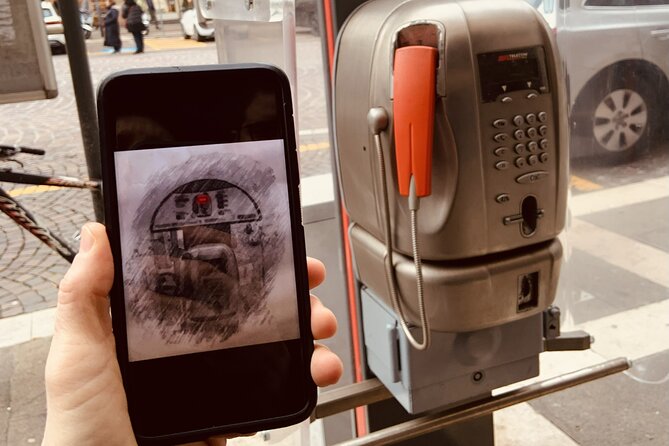
Sato Code is marketed as a challenge, and the guidance reflects that. It is described as not for kids, with an emphasis on teen and adult participation. You will see:
- a recommendation from age 13 for active participation
- a stronger recommendation for age 16 due to difficulty
- not recommended for children under 16 if unaccompanied
So how should you decide if it fits your group? I would treat it like this:
- If your group likes puzzles, codes, and logic games, it will feel like a fun workout.
- If you prefer sightseeing photos and light activities, you might find it stressful rather than entertaining.
Because you walk through shops and streets, physical effort is mostly about staying comfortable while you search. The guidance calls for moderate physical fitness, plus comfortable shoes. This is not described as strenuous, but it is active enough that you should not plan on it as a wheelchair-free, long-sit activity.
It is also designed as a team game, with phones and coordination. Families can do it, but only if you actually want to work together and think together, not just tag along.
If you bring a group that is ready for a real brain test, that is when the “real deal” feeling shows up. The game is the kind of experience that turns your puzzle hobby into a practical skill, in the real world, under time pressure.
Price and value: what $17.48 buys you in real Zug time
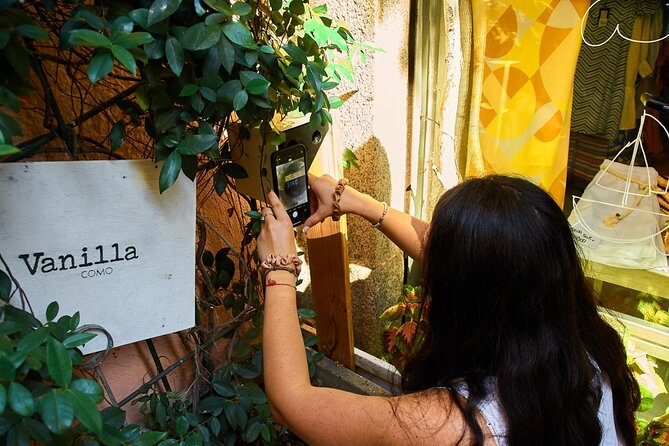
At $17.48 per person, you are paying for more than a standard ticketed attraction. You are paying for:
- one hour of active city time
- a structured route through central Zug
- a dozen clue moments that keep you mentally busy
- phone-guided teamwork that makes the experience more than a solo scavenger mission
Value jumps when you have two or more people who enjoy problem solving. Because the game needs at least two participants, it is naturally great for friends, couples, or small groups who can split roles and share the workload. The shared puzzle solving is a big part of why the experience is memorable.
It also helps that it runs across a walk-friendly central zone. In cities where puzzle games feel like you are stuck in the same block, this one gives you a believable path, from the station area toward major points like St. Oswald Church and Museum Burg.
One timing factor: it is commonly booked about 7 days in advance on average. That does not mean you have to panic, but it does mean if you are traveling at a busy time, picking a time slot early will make your planning easier.
Practical tips to keep your team moving and not stuck
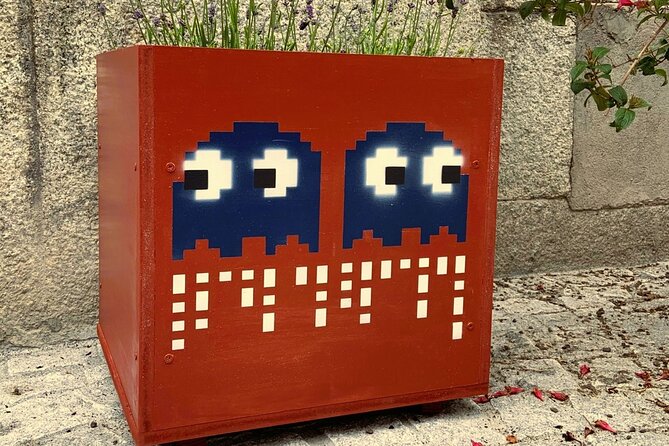
I love puzzle games when teams have a system. For Sato Code, I would set up these habits from the first clue:
- Charge first, then leave. If your battery drops during play, the game depends on the app and internet access.
- Use the same pace. Do not let one person race ahead and the other fall behind. You need both phones in sync with the next clue steps.
- Assign roles. One person can focus on clue reading, the other on entering or comparing info in the app. Then swap roles often.
- If internet is shaky, fix it fast. The game requires internet on every phone. If only one phone has connection, use your hotspot.
- Wear comfy shoes and keep your eyes up. You are scanning details in the streets and shop fronts, so stay aware while crossing and moving around.
- Talk out loud what you think it means. Codes often come from pattern thinking, and that is faster when your team verbalizes theories.
Also, set expectations early: you will likely feel “stuck” at points, especially because difficulty increases. The goal is not to be perfect, it is to keep teamwork flowing until the next connection clicks.
Should you book Sato Code Escape Room across Zug?
Book it if you want an hour that mixes movement, teamwork, and real puzzle tension, all while you walk through central Zug. It is a strong choice for groups who enjoy escape rooms, riddles, and logic games, and it is a handy alternative to a standard walking tour when you want something more interactive.
Skip it if you are traveling with kids who are not ready for tougher puzzles, or if your group prefers passive sightseeing. This is not designed to be a light stroll with occasional trivia. It is an actual brain challenge wrapped in a walk through Zug’s streets.
If you have two phones, internet access, and a team that enjoys cracking codes, this one is an easy yes.
FAQ
How long does the Sato Code Escape Room across Zug take?
It lasts about 1 hour.
Where does the game start and end?
It starts at Metalli Zug, Industriestrasse 15b, 6300 Zug. It ends back at the same meeting point.
What is the minimum group size?
You need a minimum of 2 participants.
Do I need a smartphone for each player?
Yes. It is a team game, so you need one smartphone per participant.
Is internet required during the game?
Yes. Internet is required on every phone. If only one phone has internet, you should use your hotspot.
How do I get my tickets?
You receive your tickets by SMS.
What age is it recommended for?
It is recommended for active participation from age 13, but due to difficulty it is recommended from age 16. Children under 16 are not recommended if unaccompanied.
Where in Zug does the route go?
The game starts next to the train station area and goes through the old city and toward St. Oswald Church, passing by Museum Burg (Castle) along the way.
What are the opening hours?
It runs daily from 8:00 AM to 11:30 PM.
Is cancellation free?
Yes, you can cancel for a full refund if you cancel at least 24 hours in advance. If you cancel less than 24 hours before the start time, the amount paid is not refunded.
The Rest of the Switzerland Reviews

More Puzzles Across Town
Just added to the Switzerland review pile
- Zug Scavenger Hunt and Sights Self-Guided Tour
★ 5.0 · 5 reviews
Foxtrail, Escape Games & Scavenger Hunts next to each other.
 ★ 4.5Baden Foxtrail AquaeFrom $4729 reviews
 ★ 4.0Einstein in Zurich: Walk in Time Exploration Game and TourFrom $725 reviews
 ★ 3.5Lugano Fox Trail GalileoFrom $4718 reviews
 ★ 4.0Geneva Virus Run: Stop the Infection Exploration GameFrom $717 reviews
 ★ 4.0Zurich Foxtrail OdysseusFrom $4716 reviews
 ★ 4.5Rapperswil Foxtrail BaccaratFrom $5216 reviews
 ★ 4.5Bern Foxtrail graniteFrom $4715 reviews
 ★ 4.5Geneva Scavenger Hunt and City Highlights Walking ActivityFrom $1814 reviews
Browse the lists this tour appears in