
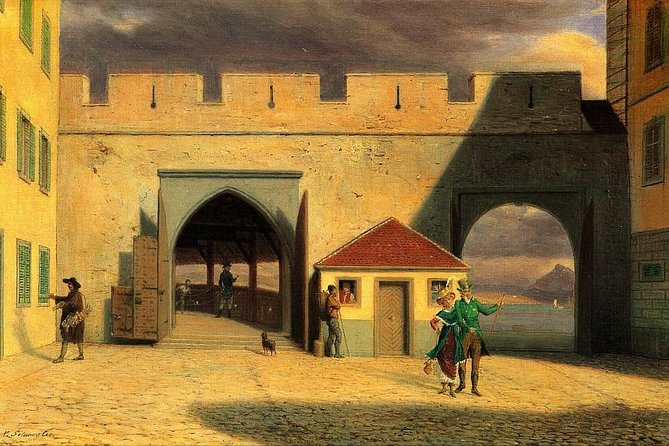
Review · LUCERNE & LAKE LUCERNE TOURS
Private 1.5-Hour Nightwatchman Walk in Medieval Lucerne
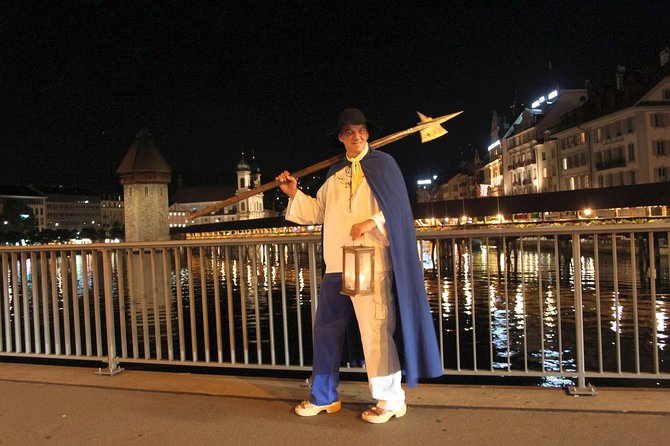
Lucerne turns medieval after dark. A private nightwatchman in costume leads you through the Old Town with a dramatic kickoff (fire horn and invocation) and keeps you hooked with a projector plus the Martiniplan, Lucerne’s early city map. I especially like how the stories connect you to specific buildings you can actually see, from St. Peter’s Chapel to Chapel Bridge.
One heads up: a few stops are marked as admission ticket not included, so you may want to plan a little extra money if you decide to enter any sites instead of just viewing exteriors.
In This Review
- Key points to know before you go
- The nightwatchman experience, from fire horn to medieval map magic
- Peterskapelle and the Martiniplan, Lucerne’s 1597 street-level time machine
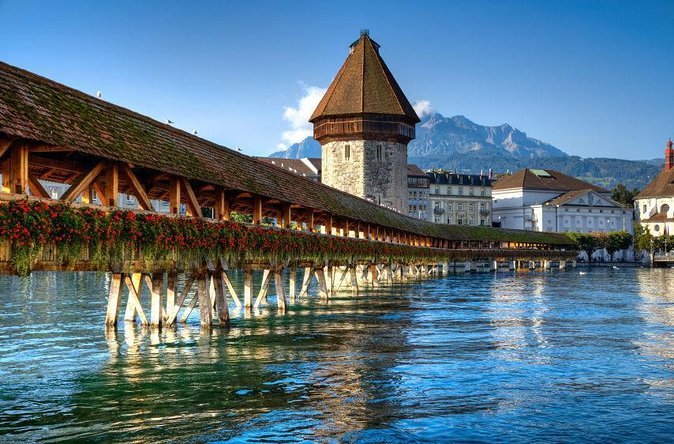
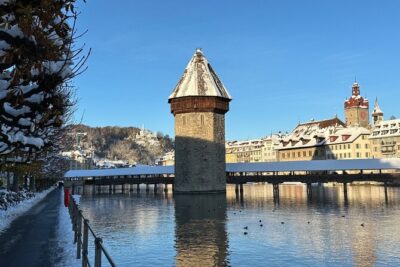
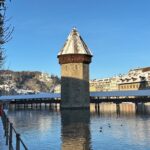
- Chapel Bridge and the Water Tower, why the medieval city cared about water
- Furrengasse, Kapellplatz, and the ghost lore of medieval Lucerne
- Kornmarkt and Weinmarkt, town power, measures, and pharmacy signs
- Brandgässli and Im Zöpfli, riots and the medieval justice machine
- Reussbrücke, the Musegg wall, and the medieval pharmacy window
- Ritterscher Palace and the Dance of Death, finishing with Chapel Bridge murals
- Price and whether this is good value at about $165 per person
- Who this tour suits best in Lucerne
- Should you book the Nightwatchman walk in medieval Lucerne?
- FAQ
- How long is the Private 1.5-Hour Nightwatchman Walk in Medieval Lucerne?
- Where does the tour start and end?
- Is the tour private?
- What language is the tour offered in?
- What is included in the price?
- Are admissions included for each stop?
- Does the tour run in bad weather?
- Are service animals allowed?
Key points to know before you go
- Nightwatchman format with props and projector, so the medieval stuff feels more like a show than a lecture
- The Martiniplan (1597) gives you a real sense of how old Lucerne lines up with today’s streets
- Landmarks grouped by theme, like bridges and water systems, justice and law, and guild life
- A route that works at night, with projected art for places like the Dance of Death
- Private tour comfort, meaning your guide can pace for your group and questions
Still on the lake? Other Lucerne reviews
- Mount Pilatus Summit from Lucerne With Lake Cruise★ 4.5 · 1,260 reviews
- Jungfraujoch Top of Europe Day Trip from Lucerne★ 4.5 · 840 reviews
- Lucerne Walking & Boat Tour: The Best Swiss Experience★ 4.5 · 417 reviews
- Lake Lucerne Panoramic Sightseeing Cruise★ 4.5 · 363 reviews
The nightwatchman experience, from fire horn to medieval map magic
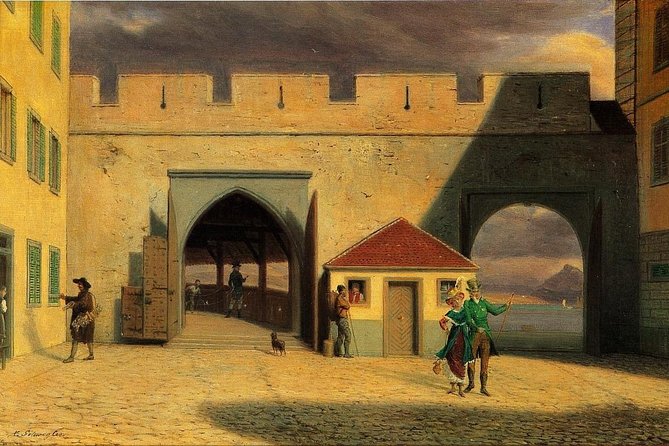
This is not a standard stroll where you just follow a guide and take pictures. The nightwatchman approach is built around atmosphere and performance, with a fire horn kickoff and an invocation moment that frames Lucerne like a story you are stepping into.
Practically, the pacing is smart for a 1 to 1.5 hour window. You get short stops where you can look up close at facades, murals, and street corners, then walk a few minutes to the next clue. Your guide uses a projector to show details that would be hard to notice in the moment, especially when you are moving and it is dark outside.
In the guides I keep seeing praised for this format, the big strength is delivery. People highlight guides such as Ralph and Rolf for being fun in-character, telling tales in clear English, and pointing out stuff you would likely miss on your own, like the guild symbols around town. That matters because Lucerne’s Old Town is beautiful, but it can also be easy to skim past the meanings.
One practical tip: dress like you expect a night walk. The tour operates in all weather conditions, and winter runs shorter (about 1 hour, November through March). Wear shoes you trust on cobblestones, and bring a layer you can stay comfortable in if it drizzles.
Peterskapelle and the Martiniplan, Lucerne’s 1597 street-level time machine
The tour starts at Rosengart Platz, and it quickly moves into one of the most useful “you are here” parts of the medieval story: the Martiniplan, Lucerne’s first city map, dated to 1597.
Your guide does something clever with the map. Instead of treating it like an old document, the projector helps you compare the routes and building locations from 1597 to what you can still see today. That turns history into navigation. You stop looking at a city, and you start thinking like a medieval resident, with a mental overlay of streets, landmarks, and the way space worked.
From there, you focus on Peterskapelle, also known as St. Peter’s Chapel. You learn about its age, dating back to the 12th century, and the role it played as the first church in town. Close to it, you also hear the story behind the expression stone rich, connected to one of Lucerne’s early private stone houses.
This stop is a highlight because it gives you context before the “legend and lore” sections start. If your goal is to understand why Lucerne looks the way it does, this is where the tour earns its keep.
Possible drawback: one of the early stops is marked as admission ticket not included. You may see everything described from the outside, but if you decide to go in, plan ahead.
Chapel Bridge and the Water Tower, why the medieval city cared about water
Lucerne’s water and defenses are tied together in a way that is easy to miss unless someone points it out. Here, you learn that the Water Tower came first, in the late 13th century, while Chapel Bridge dates to 1365.
You also get the darker side of the medieval city system. The tour includes time to look at pictures of the Water Tower’s interior and hear about the torture chamber, the dungeon, and a secret room. Even if you are not a history-violence buff, this is useful because it explains how “infrastructure” served control and punishment, not just comfort.
Then comes Chapel Bridge. Your guide explains where the bridge got its name, and later in the tour you return to cross it again. That second moment is helpful. Seeing the bridge mid-route gives you context, but finishing by crossing it helps you connect the murals and details you learned earlier.
One more detail I like for first-timers: you learn why the bridge is built diagonally over the river. It is the kind of explanation that makes you see the bridge as engineering, not just a famous postcard.
Furrengasse, Kapellplatz, and the ghost lore of medieval Lucerne
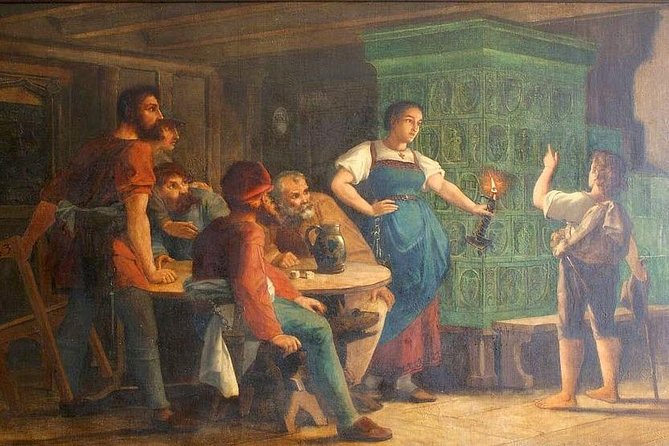
After turning a corner toward Kapellplatz, you get into the supernatural side of Lucerne’s medieval reputation. In the stretch of street called Furrengasse, the stories shift from civic details to folk tales.
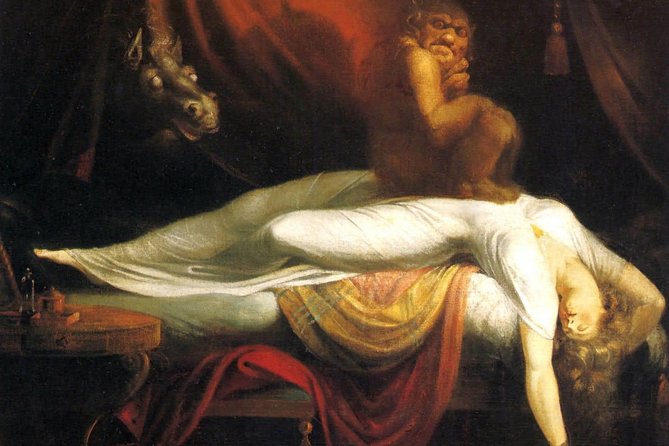
This is where the tour mentions Ghost themes and the Toggeli. You hear about the Toggeli as an incubus-like figure nicknamed the love robber and how it relates to the idea of a haunting in this area. Even if you are the type who normally skips legend talk, these stories work because they are anchored to real corners, entrances, and street layout.
This stop is also a nice break in tone. Up to this point, you have the map and religious roots, then water and punishment. Now you are walking through a lane where the “why people talked” side of medieval life comes forward.
Practical note: the time on each location is short, about 10 minutes per stop. So if you want extra photo time, keep your camera ready as you arrive, and ask your guide to repeat any detail you care about before you move on.
Private departures, other Swiss options

Kornmarkt and Weinmarkt, town power, measures, and pharmacy signs
Next you reach Kornmarkt, the Town Hall Square. This stop is all about how Lucerne organized power and daily life.
You learn about the Renaissance Town Hall and its tower, including a detail that feels almost designed for a story: the clock tower has a clock without a minute hand. Then you hear the tale of the Giant of Reiden. It is the sort of local legend that gives a square personality.
You also see the Lucerne Foot and Elle, the official measures of Old Lucerne. I love this part because it moves beyond romance and into how cities actually worked. Standards for length matter when you trade, build, and measure land. When you understand that, you stop thinking of history as just costumes and start seeing it as systems.
From there, the tour continues to Weinmarkt. You admire house frescoes and old guest house signs, then focus on a specific pharmacy house connected to Renward Cysat. Your guide highlights a Latin sentence that translates to there is no cure for a broken heart. It is a great example of how medieval art and signage can mix practical medicine with emotional realism.
A heads up for value: some stops are marked as admission ticket not included. If you are paying to see murals and windows up close, decide early if you want the optional entries, or if outside viewing is enough for your style.
Brandgässli and Im Zöpfli, riots and the medieval justice machine
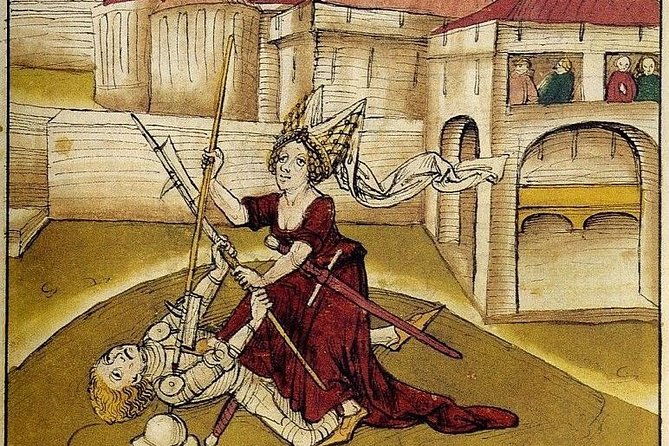
Brandgässli Alley is where the tour shifts toward conflict and social tension. You hear about a Riot of Lucerne and then move on to the former fish market, which is known today as the wine market. That’s a small but powerful reminder that cities keep reusing space. The past is still there, even when the storefront changes.
Then you arrive at Im Zöpfli, right by the river-side square. Here the tour gets very direct about law and order in old Lucerne. Your guide uses projected material about prosecution, interrogation, and corporal punishment methods in the Middle Ages.
If you are sensitive to grim topics, this is the one section where you might want to mentally prepare. Still, it adds meaning to what you see in the streets, because punishment is not random. It tells you how fear, authority, and public example shaped daily life.
For me, the strength is how the tour does not just scare you. It also gives you a framework for understanding why certain places mattered to rulers and citizens alike. You stop seeing the Old Town as pretty and start seeing it as an operating city.
Reussbrücke, the Musegg wall, and the medieval pharmacy window
Now you cross the Reussbrücke and the walk naturally expands your view of the city’s water and fortification lines. You pass along toward the Spreuerbruecke (Mill Bridge) and see the Needle Dam, plus parts of the Musegg Wall.
This section is useful because it reconnects earlier themes. Bridges, towers, walls, and water are not separate attractions. They are the same medieval design logic: control access, protect the city, and manage the river.
Then the tour brings you to Alte Suidtersche Apotheke, stopping for the medieval pharmacy window. This is one of those places where the details matter, and the nightwatchman style helps by guiding your eyes to what you might otherwise walk past. The tour explains the house and its location, tying the window to the city’s character and daily routines.
One consideration: this stop is marked as admission ticket not included. If you want to go deeper inside, check what is available at the time you visit, or plan to focus on exterior viewing if you prefer to keep costs predictable.
Ritterscher Palace and the Dance of Death, finishing with Chapel Bridge murals
The final stretch brings you to Ritterscher Palace Lucerne, where your guide covers a set of stories that feel both strange and deeply human.
You see Guardian Demons and hear about the legendary house of Lux Ritter. There is an architectural point here, why the first two floors look different than the third. Then the tour turns to the story of Hans von Trient, described as the unlucky stonemason.
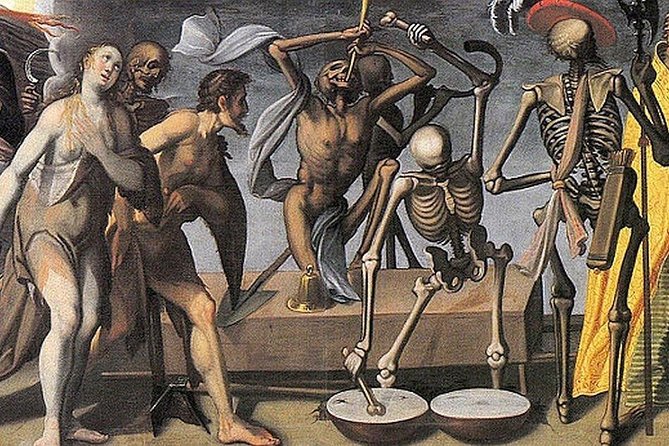
A major highlight in this area is the presentation of the seven paintings of the Dance of Death. Your guide uses projections on a house wall to show details and talk through what you are looking at. This kind of art-focused moment is ideal for a night walk because the lighting and projection make the symbolism easier to follow.
You also pass the Church of the Jesuits, described as the first baroque building in Switzerland dating back to 1677. It is a nice curveball at the end, reminding you that Lucerne did not stay medieval forever.
To close, you reach the second Chapel Bridge crossing. Your guide explains why the bridge is built diagonally over the river, then you see paintings again from a slightly different angle as you finish. The tour ends back at the meeting point.
If you care about narrative, this ending works well. You start with the city map, move through water and law, then end with art about mortality and the bridge that connects it all.
Price and whether this is good value at about $165 per person
At $165.26 per person, this is not a bargain-basement walking tour. But for a private 1.5-hour nightwatchman-style experience, it can be solid value if you want guided storytelling tied to specific places rather than general sightseeing.
Here is what you are paying for, based on what is included:
- a professional local guide in medieval costume
- a private format, only your group
- projector-based explanations for map and art details
- taxes and handling included
- mobile ticket, plus some postcards of old Lucerne
Also, the tour notes group discounts, which can reduce the sting if you are traveling with friends or family.
Where value can slip: if you are only interested in one or two postcard sights, you might prefer a cheaper self-guided plan and a quick stop at the best-known landmarks. But if you like the idea of learning why things look the way they do, and you enjoy stories told with character, you tend to feel the money is going into experience, not just walking time.
Who this tour suits best in Lucerne
This tour is especially good for:
- history-minded travelers who want context tied to visible details
- people who like a bit of theater and legends mixed with facts
- couples and small groups who prefer a private guide
- first-timers who want a structured way to understand Old Town
It may be less ideal if:
- you hate any darker justice themes, since the Im Zöpfli section covers interrogation and corporal punishment
- you want long time inside buildings, because the tour is timed and some stops are not admission included
Should you book the Nightwatchman walk in medieval Lucerne?
I would book it if you want Lucerne to feel like a lived-in medieval city, not just a pretty waterfront. The combination of night atmosphere, a costumed local guide (with strong praise for guides like Ralph and Rolf), and the use of the Martiniplan plus projections at key art sites is exactly the sort of guided approach that turns a short visit into real understanding.
Book it too if you are traveling with teens or mixed ages. The style is active and story-driven, and it is easy for different interests to latch onto different stops, from Chapel Bridge engineering details to the Dance of Death paintings.
If you are mainly after low-cost sightseeing or only want a quick photo loop, you might get similar views on your own for less money. But you will not get the same map-and-story connections that help the streets click into place.
FAQ
How long is the Private 1.5-Hour Nightwatchman Walk in Medieval Lucerne?
The tour runs about 1 hour to 1 hour 30 minutes. In winter (November through March), the duration is 1 hour.
Where does the tour start and end?
The tour starts at Rosengart Platz, 6004 Luzern, Switzerland. It ends back at the same meeting point.
Is the tour private?
Yes. It is a private tour/activity, and only your group participates.
What language is the tour offered in?
The tour is offered in English.
What is included in the price?
Included features are a professional medievally dressed local guide, a private tour, some postcards of old Lucerne, and all taxes, fees, and handling charges.
Are admissions included for each stop?
Not all stops are the same. Some stops are marked as admission ticket not included, while others are free to visit.
Does the tour run in bad weather?
Yes. It operates in all weather conditions, so dress appropriately for a night walk.
Are service animals allowed?
Yes, service animals are allowed.
Private Departures Across Switzerland


The Rest of the Switzerland Reviews


Lucerne and Its Lake, Continued

Just added to the Switzerland review pile
- Cheese, Chocolate and Wine in the Bern Region from Luzern
★ 5.0 · 3 reviews - Best of the Uri Alps: A fjord-like lake, glorious peaks and sustainable tourism
★ 5.0 · 3 reviews - Private city tour in lucerne
★ 5.0 · 4 reviews - Touristic highlights of Lucerne on a Private half day tour with a local
★ 4.0 · 5 reviews - Alpine Majesty:Exclusive Private Tour to Mount Titlis from Luzern
★ 4.0 · 5 reviews - Glacier Express Panoramic Train Round Trip in one Day Private Tour from Luzern
★ 4.0 · 5 reviews
Lucerne & Lake Lucerne Tours next to each other.
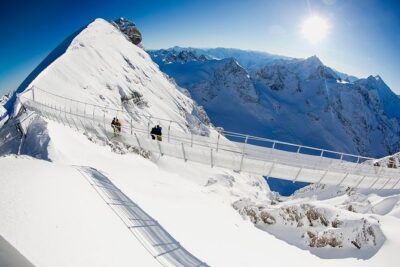 ★ 4.5Mount Titlis and Lucerne Day Trip from ZurichFrom $2151,960 reviews
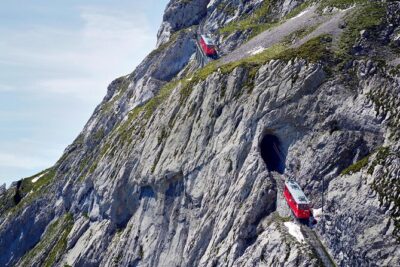 ★ 4.5Mount Pilatus Summit from Lucerne With Lake CruiseFrom $2231,260 reviews
 ★ 4.5Jungfraujoch Top of Europe Day Trip from LucerneFrom $366840 reviews
 ★ 4.5Mt Pilatus and Lucerne Day Trip from Zurich With Lake CruiseFrom $250694 reviews
 ★ 4.5Lucerne Walking & Boat Tour: The Best Swiss ExperienceFrom $118417 reviews
 ★ 4.5Lake Lucerne Panoramic Sightseeing CruiseFrom $39363 reviews
 ★ 4.5Mt Rigi and Lucerne Day Trip from Zurich With Boat RideFrom $204297 reviews
 ★ 5.0Lucerne’s Hidden Secrets by Electric Cargo BikeFrom $209288 reviews
Browse the lists this tour appears in