
Review · ZURICH TOURS & DAY TRIPS
Explore Zurich in 60 minutes with a Local
Zurich in one hour. That can sound rushed, until you realize how tightly this walk is aimed at the city’s real vibe. You meet in the old center, then glide past major landmarks and get the kind of context that helps the city click, whether it is your first visit or you want to see Zurich with fresh eyes. Two highlights I love are the quick, practical local pointers on where to go next for coffee and drinks, and the chance to see major sights in a small group. One thing to consider: this is a fast, sight-forward stroll, so if you want slow museum-style explanations and deep historical threading, you may find it moves at a brisk pace.
You also get strong guide energy. In the feedback I saw, guides like Sandro were singled out for engaging with what you care about, and Peter was praised for humorous historical storytelling during the walk. With a cap of 6 people, it stays personal enough that you can ask a question or two without feeling like a number.
Price-wise, it is not a budget gamble, but it often feels fair for what you get: an hour of guided orientation plus a short list of places to check out right away. Just know your experience will depend a lot on sharing your priorities early, especially if weather has limited what you already saw.
In This Review
- Key things to know before you go
- A 60-minute Zurich orientation that actually helps you move around
- Price and group size, what $86.16 buys you
- Rathaus to Dadaism origins, Zurich’s civic face and rebellious streak
- Grossmünster and Münsterbrücke, the skyline you will keep seeing
- Fraumünster Chagall windows and St. Peter’s clock, two concrete Zurich moments
- Lindenhof and the Roman-to-Carolingian layer you can still feel
- The Gothic finale near Predigerkirche, then keep exploring
- Guide quality matters, and the small group makes it noticeable
- Should you book this Zurich in 60 Minutes with a Local?
- FAQ
- Where does the tour start?
- Where does the tour end?
- How long is the tour?
- What is the price per person?
- How many people are in the group?
- Is there a mobile ticket?
- How far in advance is it usually booked?
- Are service animals allowed?
- What will I see during the walk?
- Will I get confirmation after booking?
- Can I get a refund if my plans change?
Key things to know before you go
- Meet at Limmatquai 55 and finish near Predigerkirche, so you get a clear start and an easy way to keep exploring after the tour.
- A tight 60-minute loop focused on famous landmarks, with stops that cover civic Zurich, art history, and big church architecture.
- Dadaism origins enter the picture early, so the walk is not only about buildings, it is also about ideas that shaped culture.
- Chagall windows at Fraumünster and Europe’s largest church clock at St. Peter’s add two “only in Zurich” moments.
- Max 6 travelers, which helps the guide keep things moving while still answering questions.
- Expect insider tips for cafes, restaurants, and bars, since many people value what to do after the walk.
More Zurich, walked and written up
- Mount Titlis and Lucerne Day Trip from Zurich★ 4.5 · 1,960 reviews
- Heidiland and Liechtenstein Tour from Zurich★ 4.0 · 1,745 reviews
- Jungfraujoch: Top of Europe Day Trip from Zurich★ 4.5 · 1,647 reviews
- Jungfraujoch Day Trip from Zurich: Swiss Alps & Bernese Oberland★ 4.5 · 1,409 reviews
A 60-minute Zurich orientation that actually helps you move around
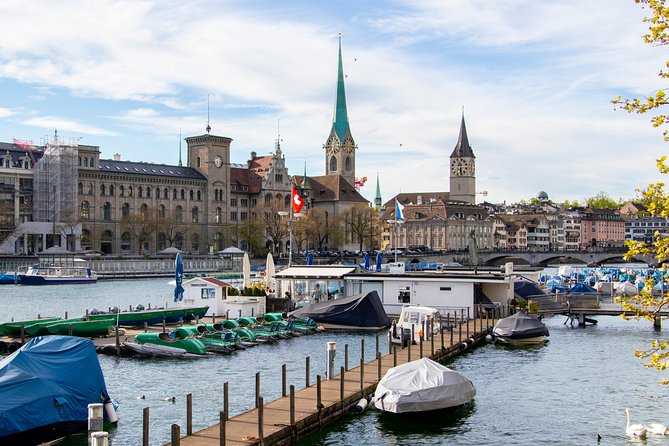
This tour is built for people who want Zurich to make sense quickly. You are not getting a long, slow history lesson. You are getting something more useful for a short trip: a guided route that connects key places, plus the everyday angles that turn landmarks into something you can picture yourself around.
You start at Limmatquai 55, a good spot because the Limmat area is part of Zurich’s daily rhythm. From there, you work your way through iconic sites and historically meaningful corners, so you leave with both a mental map and a shortlist of what is worth your time later. At the end, you finish at Predigerkirche on Zähringerpl. 6, which is convenient if you want to wander independently right away instead of doubling back.
The overall pace is what makes this work. At about an hour, you will cover a lot of ground on foot, but you will still get guide framing at each stop. That framing is the difference between snapping photos and actually remembering why a building matters.
If you are the type who likes to walk first, decide later, this is a strong fit. You will get just enough context to plan your next steps, whether that means staying in the Old Town, hunting down a specific church interior, or finding a great place to sit with a drink after the walk.
Price and group size, what $86.16 buys you
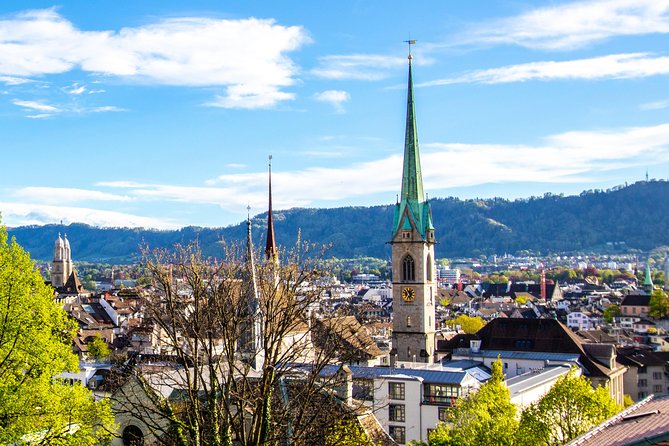
The price is $86.16 per person, and the tour runs for about 1 hour. On paper, it is short. In practice, the value is in two parts: time efficiency and quality of guidance during that time.
First, the group size is small, with a maximum of 6 people. That matters because in a tiny group, the guide can react to your interests. More importantly, you are less likely to feel like you are stuck following without any chance to ask why something is important.
Second, you are buying a curated walk with local context. The itinerary hits major highlights such as Grossmünster, Fraumünster, and St. Peter’s Church, plus the cultural pivot around Dadaism. That combination is hard to assemble yourself in an hour unless you already know where everything is and what to prioritize.
There is one consideration. Because this is a fast walk, the guide has to choose what to emphasize. If you are hoping for a deep, slow build-up of local history and how each era connects, you might feel the tour is more “see and orient” than “historic thread masterclass.” The upside is that you will still come away with enough direction to explore further on your own.
Rathaus to Dadaism origins, Zurich’s civic face and rebellious streak
Your first landmark stop is Rathaus, Zurich’s city hall. You get to see Renaissance charm while learning how Zurich’s political legacy unfolded in this very civic setting. This is a smart first stop, because it tells you something basic but essential: Zurich is not only about banking and lakes. It has long been shaped by local governance and community decisions.
Then the walk shifts gears toward culture with the birthplace of Dadaism. Dada is one of those art movements that sounds like it belongs in textbooks, but it helps to connect it to a real place. Seeing that story woven into a walk through the city center gives you a surprising sense of Zurich as a place where ideas and creativity have roots, not just a place of rules and routines.
This pairing, city hall followed by Dadaism origins, is part of why the hour feels balanced. You are not stuck in a single mood. You get civic structure, then a creative disruption.
If you like history that feels tied to real neighborhoods rather than distant museum dates, this segment works well. If you prefer quiet contemplation, the pace here may feel quick, but the stops are distinct enough to keep it from blending together.
Grossmünster and Münsterbrücke, the skyline you will keep seeing
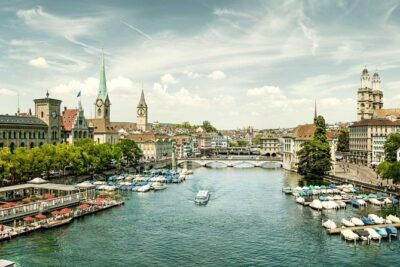
Next up is Grossmünster, described as a Romanesque marvel with its twin towers, the kind of landmark that becomes a visual anchor for Zurich’s skyline. Even if you already knew Grossmünster from photos, this stop helps you register why it is so dominant. In Zurich, it is not just a building. It is a reference point.
After that, you head to Münsterbrücke, a bridge with ancient roots and Swiss significance. Bridges in Zurich are not just crossings. They frame views, connect the feel of the river with the city streets, and they often show you how Zurich thinks in layers: old and practical, then artistic and scenic.
One thing I like about placing Grossmünster and Münsterbrücke close together is that it helps you see the city’s identity from multiple angles. You get the church towers above, then the river crossing below, and suddenly your mental map becomes physical.
If your legs tire easily, you might want to plan for some steady walking in this hour. The upside is that you will not be stuck in one long stretch. The landmarks break the time into chunks.
Other Swiss hours well spent
Fraumünster Chagall windows and St. Peter’s clock, two concrete Zurich moments
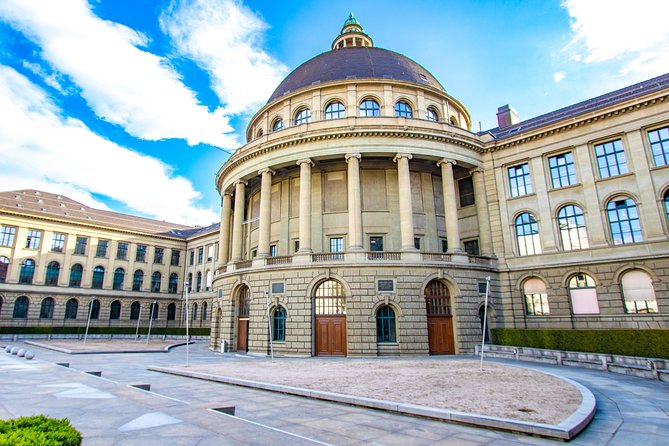
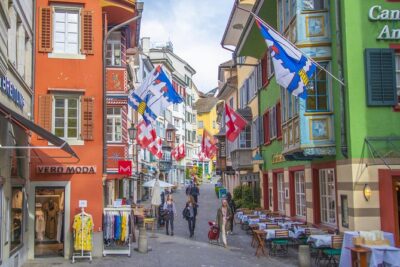
Two of the most specific stops on the route are Fraumünster and St. Peter’s Church.
At Fraumünster, you get Chagall windows as the headline, along with the church’s historical context. Even if you do not go inside for a long look, the guide framing helps you understand what you are seeing and why it is tied to Zurich’s cultural story. It is one of those “only in this city” moments, and it helps the tour stand out from a generic city walk.
Then you reach St. Peter’s Church and its Europe’s largest church clock. That is a wild fact to carry around. The bigger value is how it changes how you experience the square. Instead of seeing another church facade, you are looking at a place designed around a public rhythm, where time is part of daily life.
This pair works especially well if you enjoy architecture but also want a reason to care beyond aesthetics. The clock and the stained glass are tangible details you can remember later when you are comparing what you saw across Europe.
One small caution: churches can mean variable viewing time depending on what is accessible in the moment. The tour is structured around exterior and guided context, so your best bet is to stay flexible and not assume every interior moment is guaranteed.
Lindenhof and the Roman-to-Carolingian layer you can still feel
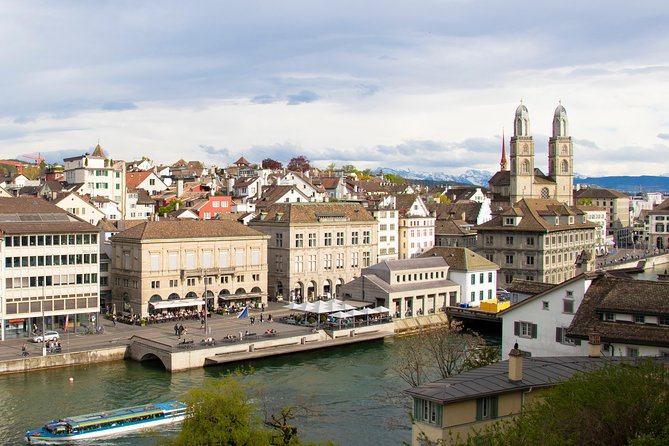
The walk then climbs toward Lindenhof, a hill area with remnants of a Roman castle and a Carolingian Kaiserpfalz (a former imperial palace site). This stop is valuable because it reminds you that Zurich’s center is not new. Under the streets and viewpoints, layers of power and settlement have stacked up.
This is the kind of stop that makes you stop and look up. Lindenhof is built for that. You get the sense of elevated perspective, and the history feels less like a lecture and more like a place you are standing on.
The route also includes a moment designed for views, where you capture Zurich’s charm from a historic bridge with stunning views and a symmetrical design. That is not just for photos. Symmetry helps your brain organize what you are seeing, and it is often easier to remember a city when you have one clean, composed viewpoint.
If you are short on time but want the feeling of depth, this section delivers it. You get a link between ancient occupation and modern city life without needing a separate excursion.
The Gothic finale near Predigerkirche, then keep exploring
The last stretch brings you to an iconic Gothic church with an intriguing history. Since the walk finishes at Predigerkirche (Zähringerpl. 6), this is where the route lands. It is a satisfying close because you move from Romanesque and church-clock landmarks into Gothic character, so the final impression stays memorable.
Finishing at Predigerkirche also gives you a practical advantage. Instead of ending at a distant transit point and feeling stuck, you end in the Old Town zone where it is easy to keep walking, browse shops, and find a meal.
A useful tip from how these tours are usually guided: treat the last stop as your moment to reset. Once you arrive at the finish location, look around and pick one direction to wander. If you liked the river views earlier, keep going toward the water. If you prefer architecture, aim back toward the densest cluster of churches and streets.
And yes, the walk includes those local pointers for where to go next, including cafes, restaurants, and bars. That is often what people use immediately, even if the guide’s best stories have already made an impression.
Guide quality matters, and the small group makes it noticeable
The best part of this kind of tour is the guide, and the feedback you have shared points to clear strengths.
Sandro, for example, was noted for asking what you had already seen and what you were interested in. That kind of check-in is more than a nicety. It determines whether you get a route that feels tailored instead of generic. If weather has knocked you off schedule, this matters even more, because your guide can try to adjust what you focus on.
Peter was praised for a friendly personality and humorous historical stories. That humor is not just entertainment. It makes facts easier to remember. When a guide adds a small joke or a story turn, the landmark becomes a character in your mental travel journal.
For you, the takeaway is simple: show up with at least a few preferences in mind. If you love views, say so. If you care about art, mention that. If you just want the essentials fast, ask for the essentials. In a group of up to 6, your answers can shape the experience more than you might expect.
Should you book this Zurich in 60 Minutes with a Local?
Book it if you want fast orientation and you like seeing big Zurich icons in a single hour, without doing homework first. It is a great first-visit option because it hits the civic center, the Dadaism angle, major churches like Grossmünster, Fraumünster, St. Peter’s, and it ends in an area where you can keep wandering right away.
Skip it or choose carefully if you want slow, deeply contextual history. This tour is designed to move. You will still learn plenty, but the structure favors getting your bearings and understanding what to see next.
My practical recommendation: if you only have a short window in Zurich, this tour is a strong use of time. If you have a few days, it is still worth it because it gives you a map for better self-guided exploring afterward, especially once you start using the guide’s cafe and drink suggestions.
FAQ
Where does the tour start?
It starts at Limmatquai 55, 8001 Zürich, Switzerland.
Where does the tour end?
It ends at Predigerkirche, Zähringerpl. 6, 8001 Zürich, Switzerland.
How long is the tour?
The duration is about 1 hour.
What is the price per person?
The price is $86.16 per person.
How many people are in the group?
The tour has a maximum of 6 travelers.
Is there a mobile ticket?
Yes, the experience includes a mobile ticket.
How far in advance is it usually booked?
On average, it is booked about 7 days in advance.
Are service animals allowed?
Yes, service animals are allowed.
What will I see during the walk?
You will visit several Zurich landmarks, including Rathaus, the birthplace of Dadaism, Grossmünster, Münsterbrücke, Fraumünster (with Chagall windows), St. Peter’s Church, Lindenhof, and an iconic Gothic church near the end.
Will I get confirmation after booking?
Yes, confirmation will be received at the time of booking.
Can I get a refund if my plans change?
No. The experience is non-refundable and cannot be changed for any reason.
One Swiss Hour, Well Spent

The Rest of the Switzerland Reviews


Zurich, A Few More Ways In
Just added to the Switzerland review pile
- Experience Swiss Countryside on a Private Tour by Car from Zurich
★ 5.0 · 3 reviews - Winterthur Foxtrail Rosalie
★ 5.0 · 3 reviews - Wakeboarding Lake Zurich – afternoon !
★ 5.0 · 3 reviews - Private Luzern and Mount Titlis Experience in Swiss Splendor
★ 5.0 · 3 reviews - Jungfrau, Top of Europe & Interlaken Small group from Zurich
★ 4.5 · 3 reviews - Private Arrival Transfer: from Zurich Airport to Bern City
★ 5.0 · 3 reviews
Zurich Tours & Day Trips next to each other.
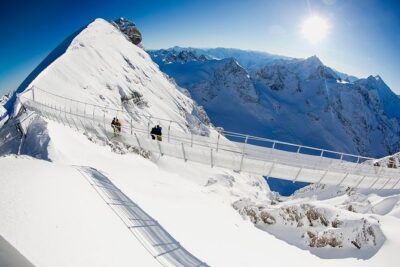 ★ 4.5Mount Titlis and Lucerne Day Trip from ZurichFrom $2151,960 reviews
 ★ 4.0Heidiland and Liechtenstein Tour from ZurichFrom $1201,745 reviews
 ★ 4.5Jungfraujoch: Top of Europe Day Trip from ZurichFrom $3801,647 reviews
 ★ 4.5Jungfraujoch Day Trip from Zurich: Swiss Alps & Bernese OberlandFrom $3861,409 reviews
 ★ 4.0Best of Zurich Tour with Felsenegg Cable Car and Ferry RideFrom $861,229 reviews
 ★ 4.0Zurich Sights: Cruise, Lindt Chocolate and optional FIFA TicketFrom $1081,028 reviews
 ★ 4.5Rhine Falls and Stein am Rhein Half-Day Tour from ZurichFrom $108716 reviews
 ★ 4.5Mt Pilatus and Lucerne Day Trip from Zurich With Lake CruiseFrom $250694 reviews
Browse the lists this tour appears in